
Delta's revenue engine outruns a record fuel bill
Delta paired record June-quarter revenue with its highest quarterly fuel expense, yet still kept full-year guidance intact. For premium sellers, the tension is clear: demand strength supports the equity story while fuel and cost pressure keep assignment risk two-sided.
YieldCove Desk
3 min read
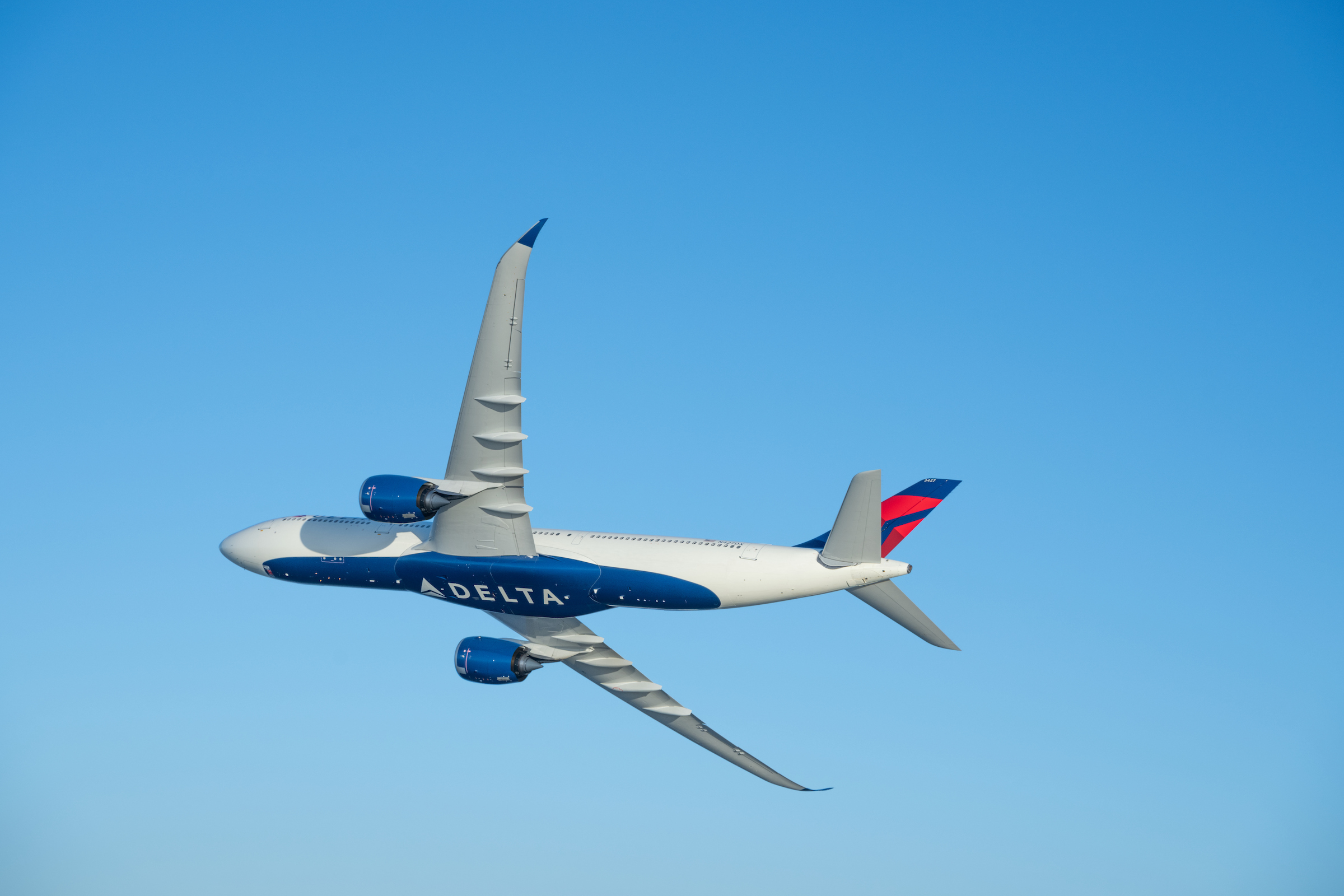
Delta Air Lines turned its June-quarter report into a test of operating resilience: demand and premium products lifted revenue even as fuel became the heaviest quarterly burden in company history. The company still affirmed its full-year outlook. For cash-secured-put and covered-call sellers, the useful question is not whether the quarter was simply good or bad, but whether the premium available in DAL compensates for a business whose revenue momentum and cost exposure are both unusually strong.
Adjusted revenue
$17.7B
+14% year over year
Adjusted operating margin
8.8%
$1.6B operating income
Adjusted EPS
$1.56
June quarter
Adjusted fuel expense
$4.4B
+77% year over year
Demand did more work than capacity
Delta reported the results on July 10, 2026, for the quarter ended June 30, 2026. GAAP operating revenue reached $19.8 billion, operating income was $1.9 billion and diluted earnings were $2.44 per share. On the adjusted basis used in its outlook, record revenue of $17.7 billion increased 14% from a year earlier while capacity grew approximately 1%. Adjusted total revenue per available seat mile rose 12.4%. Taken together, those figures suggest that yield and revenue mix—not a large increase in seat supply—carried most of the growth.
Delta's diversified revenue streams accelerated
Year-over-year growth in the June quarter of 2026; company-reported adjusted or operating metrics as described in the release.
Source: Delta Air Lines June-quarter 2026 results filed with the SEC on July 10, 2026.
The mix adds detail to the headline. Premium revenue grew 17%, loyalty and related revenue grew 19%, maintenance-repair-overhaul revenue grew 32%, and cargo revenue grew 39%. Delta said diversified revenue streams represented 61% of total revenue, two percentage points more than a year earlier. American Express remuneration reached $2.4 billion, up 16%. These are company-reported categories rather than guarantees of repeat growth, but they show that the quarter did not rest on a single passenger-revenue channel.
A record fuel burden kept the quarter two-sided
Revenue strength did not make the cost side quiet. Adjusted fuel expense was $4.4 billion, 77% above the prior-year quarter, while the adjusted fuel price of $3.93 per gallon was 75% higher. Non-fuel cost per available seat mile was 14.09 cents, up 6.8%. Delta nevertheless produced an adjusted operating margin of 8.8%, adjusted pre-tax income of $1.4 billion and adjusted earnings of $1.56 per share. The tension between pricing power and input costs is the central operating fact behind the options story.
| Checkpoint | Company outlook | What it tests |
|---|---|---|
| September-quarter revenue | Up mid-teens year over year | Whether demand and yield momentum persist |
| September-quarter operating margin | 11%–13% | Whether revenue growth absorbs the cost base |
| September-quarter adjusted EPS | $2.00–$2.50 | Whether margin converts into per-share earnings |
| September-quarter all-in fuel | Approximately $3.15 per gallon | Sensitivity to the fuel curve and refinery contribution |
| Full-year 2026 adjusted EPS | $6.50–$7.50 | Durability of the affirmed annual framework |
| Full-year 2026 free cash flow | $3B–$4B | Capacity for debt reduction and shareholder returns |
The premium-seller lens starts after the headline
The earnings release removes one known calendar event, but it does not settle the distribution of future outcomes. Implied volatility can reset after a report while the underlying business remains exposed to fuel, demand and execution. For a cash-secured put, assignment is still ownership of an airline with cyclical revenue and volatile input costs; a premium that looks rich in isolation may be small beside an adverse stock move. For a covered call, resilient revenue could increase call-away risk, while renewed cost pressure could leave the option income cushioning only part of a decline. That is context for scenario analysis, not a directional recommendation.
Guidance has an explicit fuel assumption
The approximately $3.15-per-gallon September-quarter forecast uses the fuel forward curve as of July 2, 2026, plus a 5-cent refinery benefit. A changed curve can change the economics without invalidating the demand data already reported.
What to track through the September quarter
- Compare revenue growth with the company's up-mid-teens September-quarter outlook rather than extrapolating the June result unchanged.
- Track the 11%–13% operating-margin range alongside fuel and non-fuel unit costs; the same revenue result can produce a different earnings result when the cost mix changes.
- Keep the $2.00–$2.50 adjusted-EPS range separate from the full-year 2026 range of $6.50–$7.50.
- Measure balance-sheet progress against Delta's approximately 2x year-end gross-leverage objective; adjusted net debt ended June at $13.6 billion, down $709 million from the end of 2025.
Delta's June quarter supports a stronger demand narrative, but it also demonstrates why airline option premium cannot be read as a simple reward for revenue growth. The next useful evidence is whether the September-quarter margin and fuel assumptions converge with the revenue outlook. Until then, the cleanest wheel framework separates the post-earnings volatility reset from the underlying decision to accept DAL assignment or possible call-away.
Sources
- [1]Delta Air Lines announces June quarter 2026 financial results — Delta Air Lines · Accessed 2026-07-11T06:13:02.286049Z · Tier 1
- [2]Delta Air Lines June-quarter 2026 earnings release, Exhibit 99.1 — U.S. Securities and Exchange Commission · Accessed 2026-07-11T06:13:02.286049Z · Tier 1
- [3]Delta Air Lines Form 10-Q for the quarter ended June 30, 2026 — U.S. Securities and Exchange Commission · Accessed 2026-07-11T06:13:02.286049Z · Tier 1
- [4]Official June-quarter 2026 aircraft image — Delta Air Lines · Accessed 2026-07-11T06:13:02.286049Z · Tier 1
This content is for informational and educational purposes only and is not financial advice. Options involve risk and are not suitable for every investor. Do your own research before trading.
Read next
Oil above $100 raises the stakes for the inflation test
Stock futures are recovering, but oil above $100 and rising bond yields leave little room for an inflation surprise. For premium sellers, Oracle’s cloud growth offers company-level strength without removing the market’s rate risk.
Oil above $100 tests the rebound before inflation data
Oil stays expensive as inflation data and Oracle earnings approach. For option sellers, the question is whether firmer futures compensate for a day packed with rate and company risk.

September 3 Morning Read: $ORCL sets its earnings date
U.S. futures were slightly higher around 4:07 a.m. ET as WTI held at $90.44 and the VIX read 15.29. $ORCL confirmed a September 10 after-close earnings event.