
Oracle’s AI growth meets the cash-flow test
Cloud economics, enterprise AI adoption and three conditional wheel setups before CPI.
FRIDAY · SEPTEMBER 11, 2026
The Wheelhouse · News cutoff: 06:15 Toronto. Prices: September 10 close. All dollar amounts are U.S. dollars unless stated.
The morning brief
- Oracle’s cloud growth is tangible; converting it into cash after construction spending remains the test. [1–2]
- Enterprise AI is spreading into supply chains, engineering and security. Look for paid deployments and measurable customer outcomes. [3–5]
- August U.S. CPI arrives today at 08:30 Toronto, after this newsletter. All three wheel ideas require fresh pricing at the market open. [10]
The lead · Oracle’s growth meets the cash-flow test
Oracle’s September 10 results put operating execution at the center of the AI debate. Q1 FY2027 cloud-infrastructure revenue reached $7.4 billion, up 121% year over year in reported dollars. That is realized revenue; the $664 billion of remaining performance obligations is contracted future business, with its own delivery timetable. Treating the two as interchangeable would overstate what has already been earned. [1]
Reuters reports that customer prepayments and customer-supplied hardware are central to the funding discussion. [2] Our interpretation: examine when a contract produces cash, when equipment must be purchased, and when that equipment starts earning. Strong bookings can support the thesis without settling the question of investment returns. For suppliers, the same distinction separates an exciting pipeline from orders that actually reach revenue.
The counterargument deserves equal space: demand can remain strong while construction, financing and execution absorb more resources than shareholders expect. Advance payments improve near-term funding, but they also create future service obligations. The next useful test is sustained conversion across several reporting periods, alongside capacity utilization and financing needs. A good quarter strengthens the evidence; it does not make every valuation attractive. Today’s wheel card therefore waits for the options market to absorb the earnings release.
Eddie’s watchlist · Three developments worth following
- PLTR / NVDA — supply chains. September 10’s partnership announcement combines NVIDIA Nemotron models with Palantir’s enterprise software, beginning with NVIDIA’s own supply chain. Next evidence: repeatable deployments beyond that initial setting. Our lens: operational adoption is more useful than an unquantified revenue assumption. [3]
- CRWV — physical AI. CoreWeave launched a field-engineering service on September 10, putting specialists alongside customers to apply proprietary data to production problems. Next evidence: paid projects, implementation economics and renewal. Our lens: services may help unlock infrastructure demand, but labor intensity can complicate scaling. [4]
- AKAM — agent governance. Akamai’s September 10 announcement expands its MuleSoft security and policy integration; the company reports more than 20 organizations using it. Next evidence: broader adoption and commercial contribution. Our lens: agent growth creates a governance opportunity, without establishing how much revenue this integration will generate. [5]
AI buildout & revolution
AMZN · Agents move across devices. Amazon’s September 9 article update says Quick’s desktop app is generally available on macOS and Windows, with a mobile activity feed. This is recent context, not a new launch today. Our investment question: do completed tasks produce repeat paid usage and retention? Feature availability and preview testimonials alone cannot establish attractive unit economics. [6]
GOOGL · Infrastructure needs an energy plan. On September 9, Google committed €13 billion over two years to Finnish digital infrastructure, clean energy and local partnerships. The currency is euros, and the commitment is prospective. Our lens: follow construction milestones, power availability and utilization together. Announced investment is an input to future capacity, not proof that future demand will earn an adequate return. [7]
One comparison · What funded Oracle’s quarter?
| Measure | US$ bn |
|---|---|
| Operating cash flow | 23.103 |
| Capital expenditures | 28.499 |
| Free cash flow | −5.396 |
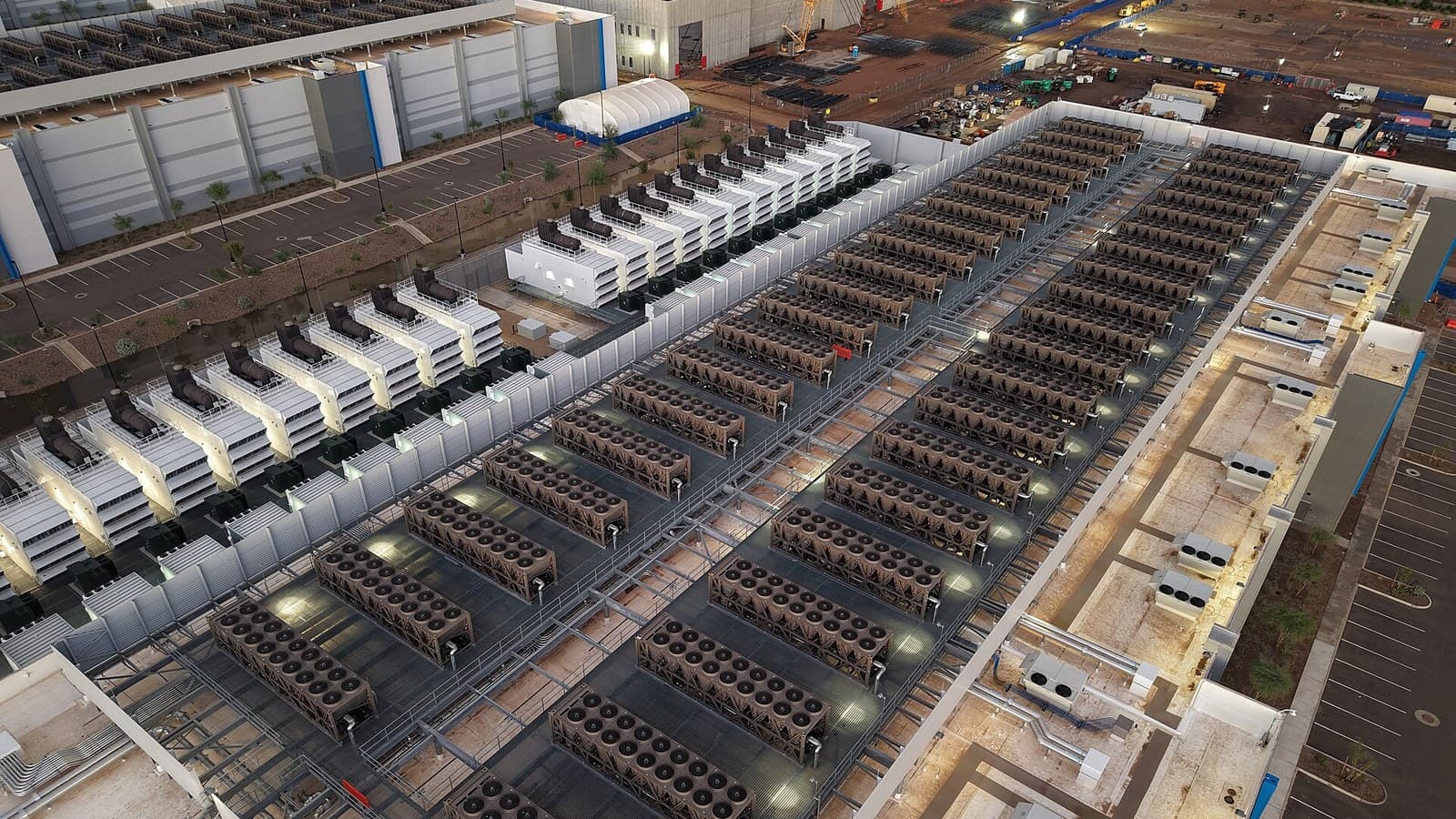
The arithmetic is 23.103 − 28.499 = −5.396. Customer prepayments of $11.363 billion are already included in operating cash flow; adding them again would double-count funding. [1–2] Our reading: inspect the composition of cash generation as closely as its size. The hero photograph illustrates data-center cooling and backup power; it does not depict an Oracle or Google project. Photo: Rsparks3, CC0. [13]
3 Wheel Trade Ideas
Before considering any contract
Three cash-secured-put scenarios, all watch only. October 16, 2026 expiry: 35 days. September 10 stock closes; delayed Cboe snapshots retrieved September 11 at 06:04 Toronto (MRVL refreshed 06:16), with last trades September 10. Bid/ask timestamps and open-interest dates are unspecified. Reprice after CPI and at the open. Figures assume standard 100-share contracts, before fees/taxes; broker deliverables need confirmation.
ORCL · $135 put · Wait for earnings repricing
Cash-secured put · Watch only
- Why wheel: cloud growth supports an ownership case, but negative free cash flow leaves funding risk. At $130.10 effective entry, value still needs testing against future cash generation; premium alone does not make it cheap. [1]
- Technicals: close $152.94; RSI14 53.5; SMA20/50/200 $149.68/$140.46/$167.05; volume 2.38×. Above shorter averages, below the long trend; not oversold. [15]
- Contract: Oct 16 $135 put; bid/ask $4.90/$5.50, delta −0.2446, IV 68.92%; volume/OI 1,045/8,290. Cash $13,500; indicative bid credit $490; breakeven $130.10. [16]
- Wait / invalidate: these premiums predate the earnings release. Require fresh post-CPI quotes and holding the $140.46 SMA50 area; a gap below it weakens this scenario. [1,15–16]
AMZN · $240 put · Conditional on trend repair
Cash-secured put · Watch only
- Why wheel: Q2 AWS operating profit was $16.6bn, but company trailing-12-month free cash flow was −$7.6bn. That combination supports research, not a cheap-stock conclusion at $235.45; spending and rate sensitivity matter. [8]
- Technicals: close $251.89; RSI14 43.6; SMA20/50/200 $259.38/$254.95/$239.62; volume 0.78×. Below shorter averages; weak, not oversold. [17]
- Contract: Oct 16 $240 put; bid/ask $4.55/$4.75, delta −0.2838, IV 31.92%; volume/OI 1,103/20,224. Cash $24,000; indicative bid credit $455; breakeven $235.45. [18]
- Wait / invalidate: require post-CPI recovery above SMA50; losing the $239.62 SMA200 area weakens the ownership scenario. Support is not a guaranteed floor or exit. [17]
MRVL · $200 put · Conditional; event risk inside expiry
Cash-secured put · Watch only
- Why wheel: Q2 FY2027 revenue grew 37%, with $605.5m operating cash flow. Cash of $3.93bn versus $4.96bn long-term debt tempers the case; a $193.20 entry still needs valuation work. AI spending is cyclical. [9]
- Technicals: close $226.96; RSI14 51.9; SMA20/50/200 $227.05/$217.56/$153.97; volume 0.66×. Neutral momentum above SMA50/200, without strong volume confirmation. [19]
- Contract: Oct 16 $200 put; bid/ask $6.80/$7.00, delta −0.2302, IV 65.12%; volume/OI 370/7,172. Cash $20,000; indicative bid credit $680; breakeven $193.20. [20]
- Wait / invalidate: October 6 Investor Day falls inside expiry. Require SMA50 support after CPI and capacity to absorb an event-driven gap; a break weakens this scenario. [12,19]
Shared risk check: loss if shares fall to zero is $13,010 / $23,545 / $19,320 respectively; assignment can occur early. IV rank and next earnings/ex-dividend dates remain unconfirmed; check them before execution. CPI and September 16’s Fed decision fall before expiry. High IV is risk, not free income; delta is not a guaranteed assignment probability. RSI uses daily Wilder(14), SMAs use adjusted closes, and relative volume compares the completed session with the prior 20-session mean. [10–11,14–20]
Next on the radar
- Today, September 11 · 08:30 Toronto: August U.S. CPI. No release outcome was available at cutoff. [10]
- September 16 · 14:00 Toronto: Federal Reserve policy decision; reassess rate-sensitive AI spending assumptions. [11]
- October 6 · Morning, New York/Toronto: Marvell Investor Day; exact start time not confirmed in the calendar. [12]
From YieldCove
Stress-test the cash and breakeven in the options calculator. Start with the shares you would willingly own, then compare the premium with the downside you can carry.
Sources
- [1]Oracle Q1 FY2027 results — Oracle · Accessed 2026-09-11 · Tier 1
- [2]Oracle cloud demand and funding context — Reuters / WDSM · Accessed 2026-09-11 · Tier 2
- [3]NVIDIA and Palantir supply-chain announcement — NVIDIA · Accessed 2026-09-11 · Tier 1
- [4]Physical AI field engineering launch — CoreWeave · Accessed 2026-09-11 · Tier 1
- [5]Akamai and MuleSoft API defense — Akamai · Accessed 2026-09-11 · Tier 1
- [6]Amazon Quick desktop availability — September 9 update — Amazon · Accessed 2026-09-11 · Tier 1
- [7]Google’s Finland investment commitment — Google · Accessed 2026-09-11 · Tier 1
- [8]Amazon Q2 2026 results — Amazon Investor Relations · Accessed 2026-09-11 · Tier 1
- [9]Marvell Q2 FY2027 results — Marvell · Accessed 2026-09-11 · Tier 1
- [10]Consumer Price Index release schedule — U.S. Bureau of Labor Statistics · Accessed 2026-09-11 · Tier 1
- [11]September 2026 calendar — Federal Reserve · Accessed 2026-09-11 · Tier 1
- [12]Investor calendar — Marvell · Accessed 2026-09-11 · Tier 1
- [13]Data center roof — photograph and CC0 license — Wikimedia Commons / Rsparks3 · Accessed 2026-09-11 · Tier 1
- [14]Cash-secured put: mechanics and risks — Options Industry Council · Accessed 2026-09-11 · Tier 1
- [15]ORCL daily price history — Yahoo Finance · Accessed 2026-09-11 · Tier 2
- [16]ORCL delayed option chain — Cboe · Accessed 2026-09-11 · Tier 1
- [17]AMZN daily price history — Yahoo Finance · Accessed 2026-09-11 · Tier 2
- [18]AMZN delayed option chain — Cboe · Accessed 2026-09-11 · Tier 1
- [19]MRVL daily price history — Yahoo Finance · Accessed 2026-09-11 · Tier 2
- [20]MRVL delayed option chain — Cboe · Accessed 2026-09-11 · Tier 1
This content is for informational and educational purposes only and is not financial advice. Options involve risk and are not suitable for every investor. Do your own research before trading.
The free YieldCove newsletter
Get The Wheelhouse in your inbox
Three briefings a week — market context, practical wheel-strategy ideas and YieldCove updates. Free to read. Unsubscribe anytime.
Educational only — not financial advice.