
After the hike: AI’s financing hurdle and three wheel decisions
New deployment signals, power flexibility and clear downside studies. EN first, français ensuite.
THURSDAY · SEPTEMBER 17, 2026 Before the U.S. open. Stock indicators use September 16 completed-session data; all amounts are USD. Fresh announcements are separated from older financial context.
The morning brief
- The financing hurdle rises. The Fed lifted its target range by 0.25 percentage point to 3.75–4.00%. Strong demand alone does not settle an AI project’s economics. [1]
- Deployment gets more concrete. Google adds commerce measurement; Nokia and Microsoft connect network data to agents. Watch adoption and paid results after the announcements. [3–4]
- Three wheel decisions. Alphabet and Microsoft need confirmation; Credo remains a pass despite Wednesday’s rebound. The cards show ownership obligations, not just premiums.
The lead · AI must earn its cost of capital
Wednesday’s rate increase changes the hurdle for new investment. The Fed’s September projections put the median year-end policy rate at 4.1%, versus 3.8% in June. These are participants’ conditional projections, not a promise of another hike. The distinction matters when valuing businesses whose infrastructure spending arrives before the associated customer cash. [1–2]
Our investment lens: separate three questions. Can a project obtain power and equipment? Can it keep that equipment productively occupied? Can revenue cover operating costs, financing and the eventual replacement of hardware? Faster chips can improve the second answer while leaving the third uncertain. A signed backlog, benchmark victory or new product launch addresses only part of this chain.
The counterargument is that expensive capital can reward disciplined operators. A provider with contracted demand, cash reserves and genuinely better utilization may gain ground as weaker competitors struggle to finance expansion. Fixed-rate borrowers also do not instantly reprice their entire debt when the Fed moves. Assess refinancing dates, floating-rate exposure and customer concentration before assuming identical damage across the sector. For wheel investors, that translates into a simple ownership test: would the lower effective entry still be acceptable if financing stayed expensive and growth disappointed?
Eddie’s watchlist radar
- GOOGL · Measure the conversion. Google’s September 16 update makes Merchant Center AI performance insights available in five countries, including Canada and the U.S.; Business Agent for YouTube ads is a U.S. beta. Next: whether conversational discovery becomes incremental profitable purchases, rather than shifting attribution between channels. [3]
- MSFT · A fresh network use case. Nokia’s September 17 announcement combines Nokia Data Suite with Microsoft Fabric for telecom automation. The release says the solution is available now, with human oversight. Next: customer deployments, integration costs and measurable service improvements; no contract value or revenue contribution is disclosed. [4]
- NBIS · Preview is the key word. Nebius published September 16 MLPerf results including Vera Rubin hardware in the preview category. This strengthens evidence of engineering capability; it does not establish broad commercial availability or booked revenue. Next: repeatable customer performance, deployment timing and cash returns. [5]
- CRDO · A product catalyst, not a new earnings report. Tuesday’s ZeroFlap announcement extends the optics portfolio to 1.6T, with diagnostics designed to detect link problems. Next: qualification and shipment economics. Wednesday’s share rebound does not by itself repair the longer trend shown below. [6,21]
AI buildout & revolution
Grid access becomes an operating agreement. Emerald AI, Google and Nvidia launched the AI Energy Management Alliance on September 16. It advocates measurable flexibility commitments, including how facilities reduce demand during grid stress. That could shorten connection delays, but an alliance is not a granted permit or a guaranteed cheaper power contract. Our lens: count the cost of interrupted work, storage and backup capacity before valuing flexibility as free capacity. [7]
Measure the whole job. MLPerf Inference v6.1 adds end-to-end retrieval-augmented generation and edge-agentic tests. These broaden assessment beyond a model’s isolated token rate. Separately, Nvidia reports up to 3.7× throughput for Rubin versus GB300 on Qwen3-VL in preview testing; that figure is workload-specific. Better benchmarks help procurement, but utilization, pricing and implementation costs still determine commercial returns. [8–9]
One comparison · What a quarter-point costs
Annual interest sensitivity · +0.25 percentage point
Illustrative fully repricing principal, not any company’s actual debt or interest bill. Zero baseline; excludes hedges, fees and taxes.
Source: YieldCove arithmetic using the Fed’s September 16 change. [1]
A $1bn balance × 0.0025 produces $2.5m of additional annual interest under this assumption. Existing fixed-rate debt is different; credit spreads may also change independently. Use the comparison to ask how much debt actually resets, not to forecast an issuer’s expense. A project can improve its engineering efficiency yet face a higher financial hurdle.
3 Wheel Trade Ideas
Read the decision before the premium. These October 16 puts have 29 calendar days to expiry. A standard contract assumes 100 shares; confirm the actual deliverable. Credits use the bid without assuming a fill, before fees/taxes. Cboe snapshots were retrieved September 17 before the open; last trades below are September 16. Exact bid/ask timestamps, provider timezone, delay duration and open-interest dates are unavailable. Reprice and revalidate at the open. [16,18,20,22]
Technicals use 501 adjusted daily Yahoo closes: Wilder RSI(14), SMA20/50/200 and completed-session volume divided by the prior 20 sessions’ average. RSI measures momentum, not rebound certainty. Signed delta is price sensitivity, not an assignment guarantee; IV rank/percentile are unavailable. Higher rates apply to all three ownership cases. These are watchlist names, not assumed holdings. [17–22] October 14 CPI at 08:30 Toronto precedes every expiry and can reprice all three names. [23]
GOOGL · Alphabet
Conditional · defend the long average · The setup: sell the $320 put, expiring 2026-10-16. One contract means agreeing to buy 100 shares at that price if assigned. Hypothetical study, not an order; confirm the 100-share deliverable and events before reconsidering.
Cash to reserve
$32,000
Indicative premium · at bid
$330
Breakeven/share · at expiry
$316.7
Maximum loss · stock at zero
$31,670
- Why own the shares: Ads and cloud support ownership research. Q2 operating margin was 34%, but free cash flow was −$5.86bn. Cash/securities $242.47bn versus long-term debt $98.17bn. Entry $316.70 implies 72.7× trailing free cash flow using June shares: a demanding valuation. [10]
- Trend and levels: Wednesday $342.87; RSI 50.1; SMA20/50/200 $341.08/$345.87/$336.77; volume 0.79×. Mixed trend, not oversold. Watch $337 support and $346 recovery. [17]
- Contract quality: 320 put: bid/ask $3.30/$3.50; spread $0.20; volume/OI 1,049/7,463; delta −0.1953; IV 30.98%. Last trade 15:59:23. [18]
What if… at expiration?
One-put P&L, before fees/taxes. Scenarios, not forecasts. Shared zero baseline; the chart does not show maximum loss. Early assignment is possible.
Source: Cboe GOOGL [18]; YieldCove calculations.
Wait / what changes the thesis
Wait for a stable $337 area and fresh quotes. A break or weaker monetization undermines ownership. Next earnings and future ex-date are unconfirmed; September 14’s declared dividend payment has passed. Do not read the lower strike as cheapness. [10]
MSFT · Microsoft
Conditional · recover short-term support · The setup: sell the $460 put, expiring 2026-10-16. One contract means agreeing to buy 100 shares at that price if assigned. Hypothetical study, not an order; confirm the 100-share deliverable and events before reconsidering.
Cash to reserve
$46,000
Indicative premium · at bid
$390
Breakeven/share · at expiry
$456.1
Maximum loss · stock at zero
$45,610
- Why own the shares: Recurring software and cloud revenue support study. June-quarter operating margin 45.1%; operating cash less cash capex $19.64bn. Cash/investments $76.84bn versus debt $40.29bn. Entry $456.10 is 25.4× FY2026 GAAP EPS, including investment gains—not a forward multiple. [11]
- Trend and levels: Wednesday $490.30; RSI 51.8; SMA20/50/200 $496.16/$459.69/$429.98; volume 0.81×. Below SMA20, above longer averages. $496 is the recovery test; $460 the next major average. [19]
- Contract quality: 460 put: bid/ask $3.90/$4.20; spread $0.30; volume/OI 520/3,962; delta −0.1857; IV 27.55%. Last trade 15:54:09. [20]
What if… at expiration?
One-put P&L, before fees/taxes. Scenarios, not forecasts. Shared zero baseline; the chart does not show maximum loss. Early assignment is possible.
Source: Cboe MSFT [20]; YieldCove calculations.
Wait / what changes the thesis
Wait for stabilization and a move back above SMA20. Slowing cloud growth or heavier sustained spending weakens the case. November 19’s confirmed ex-date falls after expiry; next earnings remain unconfirmed. Early assignment and gaps remain possible. [14]
CRDO · Credo
Pass · rebound is not a repaired trend · The setup: sell the $140 put, expiring 2026-10-16. One contract means agreeing to buy 100 shares at that price if assigned. Hypothetical study, not an order; confirm the 100-share deliverable and events before reconsidering.
Cash to reserve
$14,000
Indicative premium · at bid
$380
Breakeven/share · at expiry
$136.2
Maximum loss · stock at zero
$13,620
- Why own the shares: Connectivity demand is compelling, but valuation matters. Q1 GAAP gross margin 64.5%; operating cash less equipment purchases $82.95m. Cash/investments $764.3m versus total liabilities $284.2m, including leases. Entry $136.20 is 9.37× book equity using August shares; goodwill makes book value an imperfect cushion. [12–13]
- Trend and levels: Wednesday $161.49, up 7.38%; RSI 36.2; SMA20/50/200 $194.95/$217.26/$175.86; volume 1.17×. Still below all three averages, not RSI-oversold. $176 is the first recovery checkpoint. [21]
- Contract quality: 140 put: bid/ask $3.80/$4.50; spread $0.70; volume/OI 303/1,052; delta −0.2067; IV 70.46%. Last trade 15:56:44. Wider spread reduces execution quality. [22]
What if… at expiration?
One-put P&L, before fees/taxes. Scenarios, not forecasts. Shared zero baseline; the chart does not show maximum loss. Early assignment is possible.
Source: Cboe CRDO [22]; YieldCove calculations.
Wait / what changes the thesis
Pass until trend and spreads improve. Acquisition integration, concentrated demand and expensive capital can overwhelm the premium. Next earnings and dividend status are unconfirmed. A recovery through $176 would prompt reassessment, not an automatic trade; high IV is not safety.
Next on the radar
- September 17 · 09:30 Toronto. Our opening-session checkpoint: refresh all three option chains, confirm company events and reassess the post-Fed price action.
- October 14 · 08:30 Toronto. September U.S. CPI is scheduled before all three study expiries. Reassess inflation, financing assumptions and gap risk. [23]
- October 16 · study expiry. All three illustrations end here; earnings or dividend dates must be reconfirmed before entering. A technical level is not a guaranteed exit price.
From YieldCove
Use the wheel calculator to compare cash reserved with the downside chart. If assigned, reassess the company before considering covered calls; call premiums can cap the recovery you hoped to capture. A different ticker does not remove shared AI-spending risk.
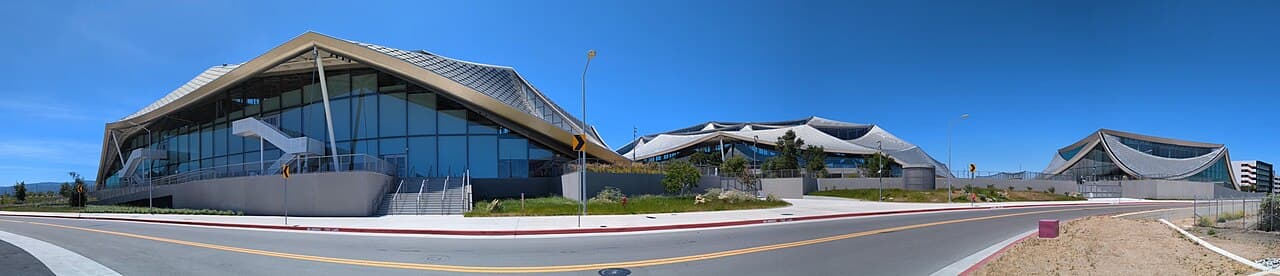
Photo: Google Bay View, May 29, 2022. Historical campus context for Google coverage; not an AEMA data center or a new facility announcement. Dicklyon / Wikimedia Commons, CC BY-SA 4.0; resized, no additional crop. [15]
Sources
- [1]Fed decision · Sep 16 — Federal Reserve · Accessed 2026-09-17 · Tier 1
- [2]September projections — Federal Reserve · Accessed 2026-09-17 · Tier 1
- [3]AI commerce · Sep 16 — Google · Accessed 2026-09-17 · Tier 1
- [4]Network agents · Sep 17 — Nokia · Accessed 2026-09-17 · Tier 1
- [5]MLPerf preview · Sep 16 — Nebius · Accessed 2026-09-17 · Tier 1
- [6]1.6T optics · Sep 15 — Credo · Accessed 2026-09-17 · Tier 1
- [7]Power alliance · Sep 16 — NVIDIA · Accessed 2026-09-17 · Tier 1
- [8]Inference v6.1 · Sep 16 — MLCommons · Accessed 2026-09-17 · Tier 1
- [9]Rubin preview · Sep 16 — NVIDIA · Accessed 2026-09-17 · Tier 1
- [10]Q2 2026 financials — Alphabet / SEC · Accessed 2026-09-17 · Tier 1
- [11]FY2026 Q4 financials — Microsoft · Accessed 2026-09-17 · Tier 1
- [12]FY2027 Q1 financials — Credo / SEC · Accessed 2026-09-17 · Tier 1
- [13]FY2027 Q1 results — Credo / SEC · Accessed 2026-09-17 · Tier 1
- [14]Dividend · Sep 15 — Microsoft · Accessed 2026-09-17 · Tier 1
- [15]Bay View · May 29, 2022 — Dicklyon / Commons · Accessed 2026-09-17 · Tier 1
- [16]Cash-secured puts — OIC · Accessed 2026-09-17 · Tier 1
- [17]GOOGL daily prices — Yahoo Finance · Accessed 2026-09-17 · Tier 2
- [18]GOOGL option snapshot — Cboe · Accessed 2026-09-17 · Tier 1
- [19]MSFT daily prices — Yahoo Finance · Accessed 2026-09-17 · Tier 2
- [20]MSFT option snapshot — Cboe · Accessed 2026-09-17 · Tier 1
- [21]CRDO daily prices — Yahoo Finance · Accessed 2026-09-17 · Tier 2
- [22]CRDO option snapshot — Cboe · Accessed 2026-09-17 · Tier 1
- [23]October release calendar — BLS · Accessed 2026-09-17 · Tier 1
AI-assisted research and translation, fact-checked by Codex. Company claims and our interpretations are distinguished; independent Grok review is required before subscriber delivery.
This content is for informational and educational purposes only and is not financial advice. Options involve risk and are not suitable for every investor. Do your own research before trading.
The free YieldCove newsletter
Get The Wheelhouse in your inbox
Three briefings a week — market context, practical wheel-strategy ideas and YieldCove updates. Free to read. Unsubscribe anytime.
Educational only — not financial advice.