
AI meets the grid queue: costs, controls and three wheel decisions
Monday’s briefing: what faster studies prove, who funds the buildout, and where to wait. EN then FR.
MONDAY · SEPTEMBER 21, 2026 Before the U.S. open. Market studies use Friday, September 18; dollars are USD. Weekend developments and earlier operating evidence are dated separately.
The morning brief
- AI meets the grid queue. AWS is applying agents to utility studies; faster preparation is a narrower achievement than faster construction. [1]
- The operating bill matters. Google’s new storage controls and a power-flexibility alliance target costs beyond model inference. [2–3]
- Three ownership decisions. Alphabet is conditional; Oracle needs a recovery; Credo remains a pass. Every premium accompanies an obligation to own shares.
The lead · Can AI shorten its own power bottleneck?
AWS’s September 17 grid-planning program offers a concrete application of agents to an infrastructure bottleneck. AWS reports that collaborating utility Duke Energy reduced data preparation from two weeks to hours. Engineers retain final decisions, while existing simulation software performs the deterministic analysis. Agents coordinate the workflow. This is a company-reported improvement in preparation, not independent evidence that a complete interconnection or construction process now takes hours. [1,13]
Our interpretation: the commercial opportunity lies in making scarce engineering time more productive. Repeatable preparation, documented assumptions and reviewable results could let a utility evaluate more projects without removing human responsibility. Amazon may gain cloud and integration work; AI infrastructure customers may eventually benefit from more efficient studies. Neither revenue contribution nor additional connected megawatts is quantified in the announcement.
The counterargument is physical and institutional. A better study cannot manufacture transformers, acquire land or settle who funds network upgrades. Additional scenarios may also reveal constraints that postpone a project. Investors should therefore follow three milestones: adoption beyond the initial utility, measured end-to-end study times, and connections actually approved. Treat the first workflow result as evidence worth investigating, while withholding a blanket forecast for faster AI capacity growth.
Eddie’s watchlist radar
- GOOGL · Costs become visible. Google’s September 18 digest lists Storage Intelligence Advisor as generally available, flagging unusual activity and egress costs. Watch whether customers retain savings after usage expands. [3]
- ORCL · Backlog needs conversion. September 10 results put remaining performance obligations at $664 billion. The next test is funded delivery and collected cash; backlog is not current revenue. [6]
- CRDO · Growth has working-capital demands. The August 1 quarter’s filing shows $151.3 million of working-capital cash outflows. Monitor collections and inventory as connectivity demand grows. [8]
AI buildout & revolution
Flexibility before more steel. The September 16 alliance from Emerald AI, Google and NVIDIA proposes measurable power-response commitments to support grid connections. Shifting workloads or using storage can help, but operating performance and utility acceptance must be demonstrated. The announcement does not establish cheaper electricity for every customer. [2]
The weekend signal. NVIDIA’s September 20 X post argues that rapid development can coexist with testing, monitoring and safeguards. That is a stated position, not proof of system safety. For investors, the useful follow-up is measurable reliability and the cost of oversight in paid deployments. [4]
A live grid stress test. A September 19 DOE notice describes a temporary order effective September 18–21 authorizing specified Duke resources and, under emergency conditions, backup generation amid Carolinas heat. It illustrates why operating flexibility matters. The order does not establish that AI caused the strain. [20]
The comparison · How much revenue goes back into equipment?
Quarterly cash equipment spending / revenue
Zero baseline. GOOGL: June 30; ORCL: August 31; CRDO: August 1, 2026. Different quarter ends and business models. Cash purchases only; acquisitions and noncash additions excluded.
Source: Company statements [5–6,8]; YieldCove calculation.
Oracle’s equipment spending exceeded quarterly revenue; that needs funding. Credo’s low ratio reflects a different model and excludes its $735.6 million acquisition cash payment. This is a capital-intensity comparison, not a ranking of returns or financial strength. [5–6,8]
3 Wheel Trade Ideas
Read this first. With the Fed at 3.75–4.00%, reserved cash has an opportunity cost. These are 25-day studies to October 16, not orders. Friday option data require repricing at today’s 09:30 Toronto open. Exact bid/ask timestamp, provider timezone, delay, OI date and IV rank are unavailable; displayed last trades are not quote timestamps. [9,12]
Daily Wilder RSI14 and SMA20/50/200 use adjusted completed closes; relative volume compares Friday with the previous 20 sessions. None is oversold. Next earnings dates were not confirmed in accessible IR calendars. Verify events and standard 100-share deliverables with the broker. Delta is not an assignment probability.
GOOGL · Alphabet
Conditional · require support to hold · The setup: sell the $325 put, expiring October 16, 2026. One contract means agreeing to buy 100 shares at that price if assigned. A discounted entry still needs a valuation limit.
Cash to reserve
$32,500
Indicative premium · at bid
$283
Breakeven/share · at expiry
$322.17
Maximum loss · stock at zero
$32,217
- Why own the shares: Diversified demand supports ownership, but rates raise the valuation hurdle. June quarter: 34.0% operating margin, −$5.86bn FCF; $242.47bn cash/securities versus $98.17bn long-term debt. Entry is 8.2× annualized quarterly sales per period-end share; not a forecast. [5]
- Trend and levels: Close $349.54; RSI 55.1; SMA20/50/200 $341.68/$345.40/$337.09; volume 1.98×. Above all three averages; seek stability around $337–345 rather than chase. [14]
- Contract quality: Bid/ask $2.83/$3.05; spread $0.22; delta −0.1780; IV 30.57%; volume 566/OI 5,886. Last trade September 18, 15:55:59, provider clock. [15]
What if… at expiration?
One-put P&L, before fees/taxes. Scenarios, not forecasts. Shared zero baseline; the chart does not show maximum loss. Early assignment is possible.
Source: Cboe [15]; standard-put math [12].
Wait / what changes the thesis
Sustained weakness below $337 or deteriorating cash conversion invalidates the setup. September 14 dividend payment is past; next ex-date unconfirmed. CPI October 14 precedes expiry. Gains in securities distort reported EPS. [5,10]
ORCL · Oracle
Watch only · trend and funding first · The setup: sell the $135 put, expiring October 16, 2026. One contract means agreeing to buy 100 shares at that price if assigned. Do not mistake a smaller cash ticket for lower business risk.
Cash to reserve
$13,500
Indicative premium · at bid
$267
Breakeven/share · at expiry
$132.33
Maximum loss · stock at zero
$13,233
- Why own the shares: Cloud demand is strong, but financing matters at higher rates. Quarter ended August 31: 34.8% operating margin, −$5.40bn FCF; $37.08bn cash/securities against $125.34bn borrowings, excluding leases. Entry is 21.2× annualized quarterly GAAP EPS, not a forecast. [6]
- Trend and levels: Close $147.61; RSI 49.6; SMA20/50/200 $149.41/$141.00/$165.47; volume 1.35×. Below short/long averages; wait for a sustained $150 recovery while $141 holds. [16]
- Contract quality: Bid/ask $2.67/$2.80; spread $0.13; delta −0.2304; IV 47.35%; volume 923/OI 9,848. Last trade September 18, 15:59:37, provider clock. [17]
What if… at expiration?
One-put P&L, before fees/taxes. Scenarios, not forecasts. Shared zero baseline; the chart does not show maximum loss. Early assignment is possible.
Source: Cboe [17]; standard-put math [12].
Wait / what changes the thesis
A break of $141 or worsening funding needs invalidates the case. $0.50 dividend: October 9 record, October 23 payment; exchange ex-date unconfirmed. Customer prepayments support cash flow and are not repeatable earnings. [6]
CRDO · Credo
Pass · require better price and trend · The setup: sell the $150 put, expiring October 16, 2026. One contract means agreeing to buy 100 shares at that price if assigned. Higher IV compensates for uncertainty; it does not remove it.
Cash to reserve
$15,000
Indicative premium · at bid
$320
Breakeven/share · at expiry
$146.8
Maximum loss · stock at zero
$14,680
- Why own the shares: AI connectivity offers growth, but customer spending is cyclical. August 1 quarter: 25.2% operating margin, $90.2m operating cash; $764.3m liquidity versus $284.2m total liabilities, no separate borrowing line. Entry costs 54.8× GAAP or 30.6× adjusted annualized quarterly EPS. Neither is a forecast. [7–8]
- Trend and levels: Close $175.89; RSI 43.1; SMA20/50/200 $188.85/$213.66/$175.83; volume 1.70×. The rebound barely holds the long average; this is not oversold. [18]
- Contract quality: Bid/ask $3.20/$3.40; spread $0.20; delta −0.1730; IV 68.02%; volume 319/OI 2,375; displayed bid depth four contracts. Last trade September 18, 15:59:46, provider clock. [19]
What if… at expiration?
One-put P&L, before fees/taxes. Scenarios, not forecasts. Shared zero baseline; the chart does not show maximum loss. Early assignment is possible.
Source: Cboe [19]; standard-put math [12].
Wait / what changes the thesis
Reconsider after sustained recovery above $189 and a defensible entry valuation; loss of $175 invalidates the rebound. Acquisition integration and customer concentration matter. No upcoming dividend/ex-date confirmed; verify earnings before any order. [7–8]
Next on the radar
- Today · 09:30 Toronto: reprice and inspect bid depth; Friday quotes cannot set Monday execution.
- October 9 · Oracle record date: confirm the exchange ex-dividend date separately before planning ownership. [6]
- October 14 · 08:30 Toronto: September U.S. CPI, two days before these options expire. [10]
From YieldCove
Use the wheel calculator to compare cash committed with downside loss. Covered calls after assignment can cap recovery; premium is not a substitute for a sound ownership case.
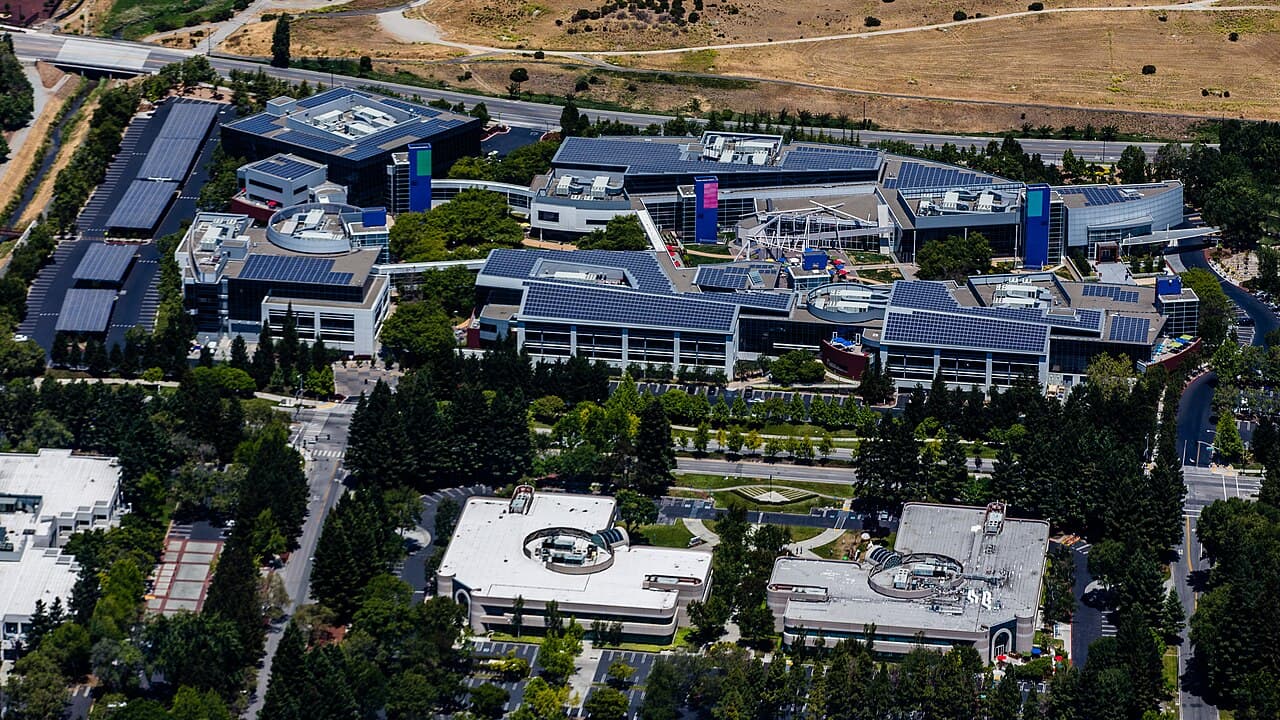
Photo: Googleplex, Mountain View, May 25, 2013. Austin McKinley / Wikimedia Commons, CC BY 3.0. Historical corporate context, not a data center; Wikimedia 1,280px rendition, no crop. [11]
Sources
- [1]Grid planning program · September 17 — AWS · Accessed 2026-09-21 · Tier 1
- [2]Power flexibility alliance · September 16 — NVIDIA · Accessed 2026-09-21 · Tier 1
- [3]Cloud release digest · September 18 — Google Cloud · Accessed 2026-09-21 · Tier 1
- [4]Speed and safeguards · September 20 — NVIDIA / X · Accessed 2026-09-21 · Tier 1
- [5]Q2 2026 results · June 30 — Alphabet / SEC · Accessed 2026-09-21 · Tier 1
- [6]Q1 FY2027 results · August 31 — Oracle · Accessed 2026-09-21 · Tier 1
- [7]Q1 FY2027 results · August 1 — Credo · Accessed 2026-09-21 · Tier 1
- [8]Quarterly filing · August 1 — Credo / SEC · Accessed 2026-09-21 · Tier 1
- [9]September 16 policy statement — Federal Reserve · Accessed 2026-09-21 · Tier 1
- [10]October release calendar — BLS · Accessed 2026-09-21 · Tier 1
- [11]Googleplex · May 25, 2013 — Austin McKinley / Wikimedia Commons · Accessed 2026-09-21 · Tier 1
- [12]Cash-secured put mechanics — OIC · Accessed 2026-09-21 · Tier 1
- [13]Agentic grid planning architecture — AWS · Accessed 2026-09-21 · Tier 1
- [14]GOOGL daily prices · September 18 — Yahoo Finance · Accessed 2026-09-21 · Tier 2
- [15]GOOGL delayed options · Monday retrieval — Cboe · Accessed 2026-09-21 · Tier 1
- [16]ORCL daily prices · September 18 — Yahoo Finance · Accessed 2026-09-21 · Tier 2
- [17]ORCL delayed options · Monday retrieval — Cboe · Accessed 2026-09-21 · Tier 1
- [18]CRDO daily prices · September 18 — Yahoo Finance · Accessed 2026-09-21 · Tier 2
- [19]CRDO delayed options · Monday retrieval — Cboe · Accessed 2026-09-21 · Tier 1
- [20]Carolinas grid order · September 19 — U.S. Department of Energy · Accessed 2026-09-21 · Tier 1
AI-assisted research and translation, separately counter-verified by Codex. Independent Grok review is required before subscriber delivery.
This content is for informational and educational purposes only and is not financial advice. Options involve risk and are not suitable for every investor. Do your own research before trading.
The free YieldCove newsletter
Get The Wheelhouse in your inbox
Three briefings a week — market context, practical wheel-strategy ideas and YieldCove updates. Free to read. Unsubscribe anytime.
Educational only — not financial advice.