
Morning sentiment: Wall Street is not making one bet
Asset managers and leveraged funds held opposite S&P futures exposures on September 1. Mixed equity returns and retail valuation questions frame the September 8 reopening.
YieldCove Desk
4 min read
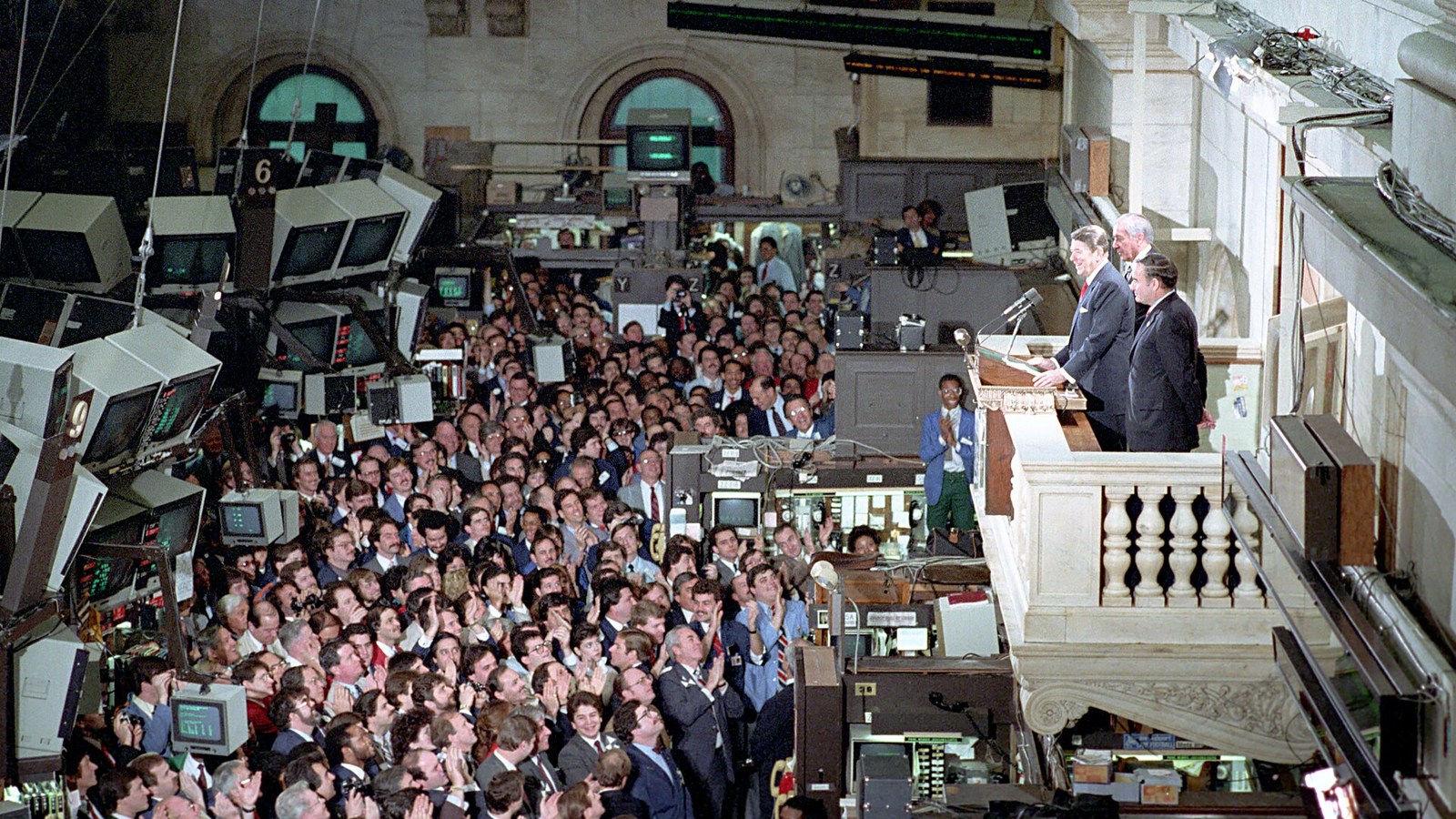
The reopening tests positions, not slogans
U.S. cash equities reopen on September 8, 2026 after the September 7 Labor Day holiday. The latest completed session is September 4; the closing figures below are dated reference points, not live entry prices. The sentiment question is narrower than the day’s economic headlines: are investors expressing a shared conviction, or holding very different risks under the same optimistic language? Official futures positioning already shows disagreement within professional money. Fresh retail discussion adds enthusiasm for familiar businesses, but also questions about valuation and thematic funds. Neither group deserves a single bullish or bearish label. [1–2,15–16]
YieldCove view
The useful test is confirmation across prices, protection demand and investor reasoning. A popular story is not evidence that its valuation is safe, and a large futures short is not automatically a forecast of a market fall.
Scoreboard: the last completed cash session
$SPY · September 4
−0.39%
Session price return
$QQQ · September 4
+0.18%
Session price return
$VIX · September 4
14.53
+0.21 points vs September 3
10-year Treasury · September 4
4.78%
Par yield, not an ETF return
| Fund | Market exposure | Close | Change |
|---|---|---|---|
| $SPY | S&P 500, capitalization-weighted | $770.19 | −0.39% |
| $QQQ | Nasdaq-100 | $718.96 | +0.18% |
| $IWM | Small-cap equities | $296.01 | +0.28% |
| $DIA | Dow industrials | $534.08 | −0.53% |
| $RSP | S&P 500, equal-weighted | $219.00 | −0.48% |
| $HYG | High-yield corporate bonds | $79.16 | −0.06% |
| $LQD | Investment-grade corporate bonds | $105.48 | −0.02% |
This was not a uniform retreat: small caps and the Nasdaq-100 fund rose while both capitalization-weighted and equal-weighted S&P funds fell. Equally, strength in those winners did not establish broad participation. The bond-fund changes were much smaller than the equity moves. These are price proxies, not records of who bought or sold, and the figures exclude distributions. A reopening that extends gains across more exposures would tell a different story from another session supported by isolated winners. [6–14]
Institutions: opposite exposures can coexist
In the CFTC’s futures-only report dated September 1, asset managers held 1,156,793 long and 222,613 short E-mini S&P 500 contracts: a net long of 934,180. Leveraged funds held 165,311 long and 482,875 short contracts: a net short of 317,564. Those are separate trader categories in the same contract family, not two surveys answering the same question. The contrast rules out the easy claim that professional investors are all positioned alike. It does not reveal their entire portfolios or their intentions at the September 8 open. [2]
A futures position can hedge other assets or form one leg of a relative-value strategy. Long-only mandates can also keep asset managers structurally invested. Treating every short as bearish conviction, or every long as a fresh purchase, confuses exposure with motivation. The reporting date matters too: this is a dated position census, not a live account of Tuesday’s order flow. Its value is to challenge the idea of a unanimous institutional trade, not to identify which side must be right.
Options and rates: protection is not panic
Cboe’s September 4 total put/call volume ratio was 0.76. The equity ratio was 0.58, while the combined $SPX and $SPXW ratio was 1.15. Different product groups therefore carried different activity balances. Contract volume does not identify whether an option was bought or sold to open, whether it was part of a spread, or whether the account was retail or institutional. Calling the lower equity ratio a direct measure of retail exuberance would overstate the evidence. [4]
The $VIX closed at 14.53, up from 14.32. That increase is compatible with more demand for protection, but it does not establish a panic regime or a coming price direction. Treasury par yields were 4.37% at two years and 4.78% at ten years, a 41-basis-point gap. Meanwhile, $HYG fell 0.06% and $LQD fell 0.02%. Neither bond fund is a pure credit-spread measure: interest-rate exposure and distributions also matter. Together, the indicators argue for checking equity enthusiasm against financing conditions rather than declaring that credit has endorsed it. [3,5,11–14]
Retail pulse: belief meets the valuation question
In r/stocks on September 7, a discussion defended a concentrated $NVDA holding by emphasizing the company’s perceived importance to the technology economy. Another asked whether liking Reddit’s product was biasing the assessment of $RDDT’s valuation. These are useful examples of different reasoning, not proof of company fundamentals. Perceived indispensability can explain enthusiasm without establishing that a stock is attractively priced. Product familiarity can help someone understand a business while also making it harder to challenge a favorite investment story. [15]
In r/ETFs on September 8, a $KOID discussion explicitly requested the bearish case for a robotics theme, including commercialization and dependence on AI progress. A separate September 7 discussion considered factor tilts while acknowledging existing technology-heavy exposure and taxable gains. That is not simply fear versus greed; it is enthusiasm being tested against implementation risk. These conversations are non-representative opinions. They establish neither market-wide sentiment nor actual capital flows, and social company claims are not investment evidence. [16]
Where the signals agree—and where they do not
| Observation | Possible reading | What it cannot prove |
|---|---|---|
| Opposite institutional futures exposures | Professional positioning is not unanimous | Which portfolios are unhedged |
| Equity calls and index puts show different balances | Speculation and protection can coexist | Retail intent from product volume |
| Technology enthusiasm plus valuation questions | Confidence and skepticism coexist | A representative retail consensus |
| Mixed equity and modest bond-fund moves | Confirmation remains incomplete | An imminent reversal or all-clear |
What would change the view
- Broader participation: sustained equal-weight strength alongside the larger index would strengthen the optimistic interpretation.
- Consistent protection signals: volatility and index-option activity need context across sessions, rather than a verdict from a single ratio.
- Better business reasoning: discussion tied to cash generation, competition and valuation is more informative than claims that a company is too important to disappoint.
- Confirmation from credit: worsening financing conditions would challenge a benign equity interpretation even if the most popular shares remained firm.
Counterargument and bottom line
The strongest counterargument is that mixed positioning is normal. Hedges can support risk-taking rather than signal impending liquidation, while a selective advance can persist without every segment joining in. The reverse risk is overconfidence: calm index volatility can coexist with sharp losses in individual shares, and a popular theme can disappoint even when its technology succeeds. YieldCove’s reading is therefore unresolved rather than bearish. The reopening offers a test of whether price participation, protection demand and investor reasoning converge. Until they do, describing one side as smart money and the other as emotional money hides more than it explains.
Sources
- [1]NYSE trading calendar / Calendrier des séances NYSE — New York Stock Exchange · Accessed 2026-09-08T09:05:34.443421+00:00 · Tier 1
- [2]CFTC futures-only positions, September 1 / Positions sur contrats à terme, 1 septembre — Commodity Futures Trading Commission · Accessed 2026-09-08T09:05:34.481220+00:00 · Tier 1
- [3]Cboe $VIX daily history / Historique quotidien du $VIX — Cboe Global Markets · Accessed 2026-09-08T09:05:34.417009+00:00 · Tier 1
- [4]Cboe options volume and put/call ratios / Volumes et ratios options de vente/achat — Cboe Global Markets · Accessed 2026-09-08T09:05:34.438743+00:00 · Tier 1
- [5]U.S. Treasury par yield curve / Courbe des taux au pair du Trésor américain — U.S. Department of the Treasury · Accessed 2026-09-08T09:05:34.440607+00:00 · Tier 1
- [6]$SPY daily closes / Cours de clôture quotidiens — Yahoo Finance · Accessed 2026-09-08T09:05:34.207087+00:00 · Tier 2
- [7]$QQQ daily closes / Cours de clôture quotidiens — Yahoo Finance · Accessed 2026-09-08T09:05:34.207449+00:00 · Tier 2
- [8]$IWM daily closes / Cours de clôture quotidiens — Yahoo Finance · Accessed 2026-09-08T09:05:34.207777+00:00 · Tier 2
- [9]$DIA daily closes / Cours de clôture quotidiens — Yahoo Finance · Accessed 2026-09-08T09:05:34.208068+00:00 · Tier 2
- [10]$RSP daily closes / Cours de clôture quotidiens — Yahoo Finance · Accessed 2026-09-08T09:05:34.208383+00:00 · Tier 2
- [11]$HYG daily closes / Cours de clôture quotidiens — Yahoo Finance · Accessed 2026-09-08T09:05:34.208493+00:00 · Tier 2
- [12]$LQD daily closes / Cours de clôture quotidiens — Yahoo Finance · Accessed 2026-09-08T09:05:34.209010+00:00 · Tier 2
- [13]U.S. ETF closing-price comparison / Comparaison des clôtures des FNB américains — TradingView · Accessed 2026-09-08T09:05:34.209109+00:00 · Tier 3
- [14]U.S. ETF closing prices / Cours de clôture des FNB américains — CNBC · Accessed 2026-09-08T09:05:34.323393+00:00 · Tier 2
- [15]r/stocks: investor discussion / Discussions d’investisseurs — Reddit · Accessed 2026-09-08T09:05:34.533786+00:00 · Tier 4
- [16]r/ETFs: investor discussion / Discussions d’investisseurs — Reddit · Accessed 2026-09-08T09:07:51.203763+00:00 · Tier 4
This content is for informational and educational purposes only and is not financial advice. Options involve risk and are not suitable for every investor. Do your own research before trading.
Read next
Tech holds its ground, but market confidence stays narrow
Technology-heavy shares held steady while broader equity measures fell. For option sellers, that split makes participation and downside exposure more useful than a single bullish or bearish sentiment label.

Retail’s AI conviction splits behind Friday’s rebound
Friday’s rebound sits beside a fresh divide over AI risk in retail discussions. For option sellers, mixed options activity and weaker Monday futures offer no single confidence signal.
Stocks rebound against a divided futures backdrop
September 8 futures positions split asset managers and leveraged funds before Friday’s rebound. Weekend retail views pair ambitious bets with diversification concerns, giving option sellers no single risk signal.