
Thursday brief · October 1
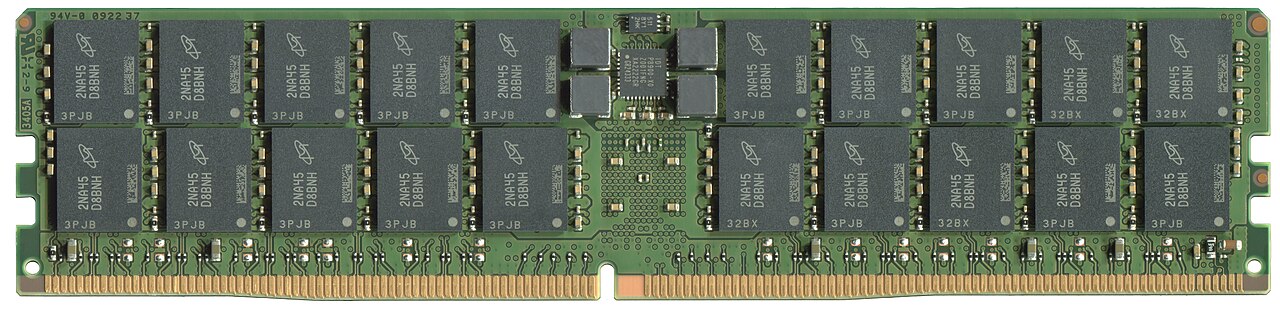
- Memory earns its place: Micron’s new results put cash generation behind the AI buildout story. The question is how much of that earning power survives the next capacity cycle. [1]
- Demand meets inflation: August spending strengthened while inflation remained a valuation constraint. Tomorrow’s employment report is the next scheduled macro checkpoint. [2,6]
- Wheel desk: Micron, Alphabet and Amazon offer three different ownership tests. Clear cash and loss panels come first; all studies remain conditional, with Micron a pass until post-earnings repricing.
The lead · memory is making money; durability sets the price
Micron’s September 30 release reported $54.23 billion of revenue for the quarter ended September 3. Management’s next-quarter revenue outlook is $61.5 billion, plus or minus $1.5 billion. The first is a reported result; the second is a forecast. [1]
Our interpretation: memory has become an important place to examine who earns from AI construction. A supplier can benefit while its customers are still proving their own returns. That does not mean every company exposed to the same spending cycle deserves the same valuation or will convert orders into cash at the same speed.
For shareholders, the useful question is what a normal year could look like after the current expansion. Strong demand can support pricing, but profitable conditions also encourage investment. Future supply, customer bargaining power and more efficient workloads can change the balance. A spectacular quarter should make the ownership thesis more specific, not make its risks disappear.
The bullish case is that richer workloads keep demanding more memory and extend the earnings runway. The counterargument is that buyers eventually need their spending to produce durable profits, too. We would follow repeat orders, pricing discipline and cash after investment together. Neither a bullish earnings headline nor yesterday’s option premium settles that debate.
Eddie’s watchlist · three ownership questions
- MU — after the report: the next useful evidence is the first regular-session repricing after earnings. Compare the new market with a refreshed business thesis, rather than treating the old option chain as a discount coupon. Our wheel card deliberately keeps those two information sets separate. [1,10,11]
- GOOGL — utilization matters: Google’s September infrastructure recap describes scale-to-zero and workload snapshots. These address the cost of idle capacity and restarting work. Our question: can better efficiency attract enough paid activity to offset lower resource use per task? A product capability is not a revenue forecast. [3]
- AMZN — growth has a funding bill: the June-quarter release reported AWS sales up 37%, alongside negative trailing-year free cash flow. That is older financial context, not new October news. The next results should help show whether cloud demand and investment spending are moving toward a more comfortable cash balance. [4]
AI buildout & adoption · two costs beyond the model
1. Idle infrastructure. Scale-to-zero can reduce resources allocated while a workload is inactive. Our investment read is that utilization deserves attention alongside installed capacity: a chip that is busy doing useful paid work has different economics from one waiting for demand. Faster restarts may help, but Google’s performance claims come from its own tests; we do not assume a universal saving or a measured increase in customer profits. [3]
2. Persistent working memory. Google describes Filestore agent volumes as a preview for isolated file workspaces. An agent needs somewhere to keep its work, not merely a model to answer a question. Storage, access controls and integration can add recurring costs. Our interpretation: adoption could create spending outside accelerators, while complexity and operating overhead could slow deployment. Preview availability is not proof of broad production use. [3]
One chart · cash left after the investment bill
Micron: cash generation and investment
FY26 Q4 ended September 3; net capex and adjusted free cash flow are non-GAAP.
Source: Micron; YieldCove calculations [1].
Text alternative: operating cash $43.97 billion minus net capex $10.77 billion equals adjusted free cash flow $33.20 billion. These are Micron’s quarterly figures and definitions, not an annual forecast or cash available for immediate shareholder distribution. Do not compare this quarter directly with Amazon’s trailing-year cash figure. [1,4]
Macro lens: BEA’s September 30 release put August real spending growth at 0.6% month over month and core PCE inflation at 3.0% year over year. Stronger consumption can support businesses; persistent inflation can constrain the valuation investors will pay for distant profits. Tomorrow’s jobs data could change the balance. These are scenarios, not a prediction of the next rate decision. [2,6]
3 Wheel Trade Ideas
PRIOR-SESSION STUDIES · October 16 puts, 15 calendar days. Stock close and option last trades: September 30. Cboe was retrieved October 1 at 04:47:29 Toronto; retrieval time is not quote time. Exact bid/ask timestamp, timezone, delay, OI date and IV rank/percentile remain unconfirmed. Options are closed at 08:00; reprice after 09:30. MU quotes precede its earnings. No fill assumed.
One standard 100-share put per study; verify deliverables. Cash = strike × 100; credit = bid × 100; breakeven = strike − bid; maximum loss = cash − credit at a zero share price. Technicals use daily adjusted closes: Wilder RSI14, SMA20/50/200 and completed-session volume versus the preceding 20 sessions. All amounts USD. Delta is not assignment probability. [7,10–15]
Valuation warning: annualizing a single quarter’s EPS can produce a misleadingly low multiple. Micron faces a cycle; Alphabet and Amazon reported large other-income contributions. We show that distortion explicitly rather than call any effective entry “cheap.” A wheel requires willingness and sufficient capital to own the shares through a loss. [1,4,5]
MU · Micron
Pass · earnings changed the evidence · Prior-session study: the $950 put, expiring October 16, 2026. One contract means agreeing to buy 100 shares at that price if assigned. Prior-session arithmetic; not a current offer.
Cash to reserve
$95,000
Reference credit · not current
$1,305
Breakeven/share · at expiry
$936.95
Maximum loss · stock at zero
$93,695
- Why own the shares: Memory demand supports the ownership case, but rates and future supply can compress the valuation. Reference breakeven is 7.13× four times quarterly GAAP EPS of $32.87. This is a cycle-sensitive arithmetic proxy, not forward P/E or fair value. New results do not refresh an old option quote. [1]
- Trend and levels: Close $1,065.11; RSI 59.7; SMA20/50/200 $1,012.10/$951.59/$673.03; relative volume 1.23×. Above all three averages, not oversold. [10]
- Contract quality: September 30: bid/ask $13.05/$13.65; spread $0.60; delta −0.1708; IV 63.19%; volume 1,251/OI 3,063. Last trade 15:59:58, provider clock. [11]
Reference arithmetic · prior-session study
One-put P&L, before fees/taxes. Scenarios, not forecasts. Shared zero baseline; the chart does not show maximum loss. Early assignment is possible.
Source: Cboe; YieldCove calculations [11].
Wait / what changes the thesis
Reconsider only with post-earnings quotes and stabilization above the prior 50-day average near $952. A sustained break below that reference or weakening memory economics invalidates the setup. Next earnings date and ex-dividend date unconfirmed; declared $0.15 dividend has October 14 record and October 29 payment dates. [1]
GOOGL · Alphabet
Watch-only · demand proof before premium · Prior-session study: the $325 put, expiring October 16, 2026. One contract means agreeing to buy 100 shares at that price if assigned. Prior-session arithmetic; not a current offer.
Cash to reserve
$32,500
Reference credit · not current
$214
Breakeven/share · at expiry
$322.86
Maximum loss · stock at zero
$32,286
- Why own the shares: Search and cloud support an ownership case, but advertising and rates remain macro risks. June-quarter revenue was $119.8 billion and operating margin 34%. Quarterly EPS $9.11 includes substantial other income; the 8.86× annualized-quarter proxy at breakeven is distorted and cannot establish cheapness. [5]
- Trend and levels: Close $344.08; RSI 50.2; SMA20/50/200 $342.49/$343.79/$338.22; relative volume 1.43×. Near the shorter averages, slightly above all three; not oversold. [12]
- Contract quality: September 30: bid/ask $2.14/$2.56; spread $0.42; delta −0.1789; IV 32.26%; volume 624/OI 7,295. Last trade 15:58:24, provider clock. [13]
Reference arithmetic · prior-session study
One-put P&L, before fees/taxes. Scenarios, not forecasts. Shared zero baseline; the chart does not show maximum loss. Early assignment is possible.
Source: Cboe; YieldCove calculations [13].
Wait / what changes the thesis
Wait for fresh quotes and sustained support near $338. A lasting break below the 200-day average or deterioration in search/cloud economics invalidates the thesis. Next earnings and ex-dividend dates unconfirmed; verify both before entry. Historical open interest does not guarantee today’s liquidity.
AMZN · Amazon
Watch-only · trend needs repair · Prior-session study: the $235 put, expiring October 16, 2026. One contract means agreeing to buy 100 shares at that price if assigned. Prior-session arithmetic; not a current offer.
Cash to reserve
$23,500
Reference credit · not current
$139
Breakeven/share · at expiry
$233.61
Maximum loss · stock at zero
$23,361
- Why own the shares: AWS gives the ownership case substance, but consumer sensitivity and construction spending matter. June-quarter GAAP EPS was $5.75, with large investment-related other income. Breakeven is 10.16× annualized quarterly EPS; that distorted proxy is not a valuation endorsement, particularly with negative trailing-year free cash flow. [4]
- Trend and levels: Close $249.15; RSI 45.2; SMA20/50/200 $252.35/$256.12/$241.11; relative volume 1.23×. Below shorter averages, above the 200-day; not oversold. [14]
- Contract quality: September 30: bid/ask $1.39/$1.55; spread $0.16; delta −0.1702; IV 30.72%; volume 1,062/OI 11,540. Last trade 15:59:35, provider clock. [15]
Reference arithmetic · prior-session study
One-put P&L, before fees/taxes. Scenarios, not forecasts. Shared zero baseline; the chart does not show maximum loss. Early assignment is possible.
Source: Cboe; YieldCove calculations [15].
Wait / what changes the thesis
Reconsider after quote confirmation and recovery above $252–256. A sustained break below $241 or worsening cloud cash economics invalidates the setup. Next earnings and dividend/ex-date status remain unconfirmed; check issuer and broker calendars. Support is a reference, never a guaranteed exit.
Next on the radar · Toronto time
- October 1, 09:30: compare the regular-session stock and option market with yesterday’s references. Micron requires a full post-earnings reassessment, not a mechanical order.
- October 2, 08:30: September U.S. employment report. Watch wage and labor-demand evidence alongside the headline; no outcome is assumed. [6]
- October 14, 08:30: September CPI, before these October 16 expiries. A contract spanning that release carries macro event risk even without company earnings. [6]
From YieldCove · write the ownership test
Use YieldCove to record why you would own 100 shares, how much cash that requires and what would change your mind. A later covered call caps upside; it does not erase a deep stock loss. These three names share AI and technology exposure, so different tickers alone do not create diversification.
AI-assisted editorial by Codex. Educational information, not personalized investment advice. Early assignment is possible. Scenarios exclude fees and taxes; no trades are executed.
Sources
- [1]Micron FY26 Q4 · September 30 / 30 septembre — Micron · Accessed 2026-10-01 · Tier 1
- [2]August PCE · released September 30 / publié le 30 septembre — BEA · Accessed 2026-10-01 · Tier 1
- [3]September infrastructure recap · accessed October 1 / consulté le 1er octobre — Google Cloud · Accessed 2026-10-01 · Tier 1
- [4]Amazon Q2 2026 results / Résultats T2 2026 — Amazon · Accessed 2026-10-01 · Tier 1
- [5]Alphabet Q2 2026 filed release / Résultats déposés T2 2026 — Alphabet / SEC · Accessed 2026-10-01 · Tier 1
- [6]October 2026 release calendar / Calendrier octobre 2026 — BLS · Accessed 2026-10-01 · Tier 1
- [7]Cash-secured put mechanics / Put garanti en espèces — OIC · Accessed 2026-10-01 · Tier 1
- [8]Micron DDR5 module · archive scan, April 7, 2024 / numérisation du 7 avril 2024 — PantheraLeo1359531 / Wikimedia Commons · Accessed 2026-10-01 · Tier 1
- [9]Image license / Licence image · CC BY 4.0 — Creative Commons · Accessed 2026-10-01 · Tier 1
- [10]MU completed daily prices / Séances complètes — Yahoo Finance · Accessed 2026-10-01 · Tier 2
- [11]MU September 30 options / Options du 30 septembre — Cboe · Accessed 2026-10-01 · Tier 1
- [12]GOOGL completed daily prices / Séances complètes — Yahoo Finance · Accessed 2026-10-01 · Tier 2
- [13]GOOGL September 30 options / Options du 30 septembre — Cboe · Accessed 2026-10-01 · Tier 1
- [14]AMZN completed daily prices / Séances complètes — Yahoo Finance · Accessed 2026-10-01 · Tier 2
- [15]AMZN September 30 options / Options du 30 septembre — Cboe · Accessed 2026-10-01 · Tier 1
This content is for informational and educational purposes only and is not financial advice. Options involve risk and are not suitable for every investor. Do your own research before trading.