
Friday brief · October 2
- AI finds its voice: Microsoft’s new speech models make the cost of a useful conversation a more tangible investment question. Lower unit prices help adoption; they do not automatically increase supplier profits. [1]
- Cloud beyond chat: Kodiak’s AWS announcement connects simulation and autonomous trucking. Safety validation creates computing work before a driverless highway business has proved its economics. [2]
- Wheel desk: Microsoft, Apple and Meta remain watch-only. Today’s jobs report comes before the options opening; yesterday’s premium cannot settle today’s ownership decision.
The lead · cheaper speech still needs a paying customer
Microsoft announced MAI-Transcribe-2-Streaming and two MAI-Voice-2.1 variants on October 1. Its streaming transcription introduction is $0.54 per audio hour through year-end. Speech generation has a separate character-based price, shown below. These are announced product terms, not evidence of customer profitability. [1]
Our interpretation: voice makes the AI investment question concrete. A business might use it to answer routine calls, explain a bill or help a customer complete a purchase. The meaningful measure is cost per correctly completed task. Counting generated words misses the cost of an abandoned call, a wrong answer or a transfer to a human.
Microsoft’s opportunity is to turn useful interactions into repeat cloud consumption. A more affordable component can make previously uneconomic applications worth trying. Developers still have to connect customer records, protect access and handle interruptions. Those integration expenses help explain why a compelling demonstration can precede a durable business by quite some time.
The counterargument is straightforward: price competition may transfer much of the benefit to customers. More usage need not mean better margins if each interaction earns less or requires expensive support. We would look for retention, completed tasks and cash generation together. A launch widens the opportunity set; it does not establish what shareholders should pay for it.
Eddie’s watchlist · what deserves another look
- MSFT — distribution versus monetization: yesterday’s launch adds a product to watch, while the July earnings release remains the financial baseline. The next useful evidence is paid, recurring use. Avoid turning a model announcement into an unreported revenue forecast. Our wheel study ties that opportunity to an ownership price. [1,3]
- MU — follow-through after results: Thursday’s completed close was $1,097.39, up 3.03%, with volume 1.82 times the prior 20-session average. This followed Wednesday’s results; timing alone does not prove the cause of the move. Watch whether the next sessions retain that participation. [17,18]
- AAPL and META — quality still has a price: their cards use older reported earnings, not fresh October results. Apple’s tariff benefit and Meta’s investment bill complicate simple multiples. The next earnings releases must test whether product demand and advertising economics justify the capital committed. No confirmed next-report date is assumed. [4,5]
AI buildout & adoption · where the work lands
1. Simulation before the highway. Kodiak says AWS is its primary cloud provider for AI development and safety simulations, ahead of a planned public-highway driverless launch later in 2026. The announcement discloses no contract value. Our read: repeated testing can create cloud demand, but a customer deployment is not proof of material AWS revenue or profitable trucking. Keep the supplier opportunity separate from the operator’s execution risk. [2]
2. The operating bill around speech. Our framework for evaluating voice adoption has three layers: model charges, connecting the agent to business systems, and supervision when it fails. The cheapest speech engine could still be the more expensive service if customers need repeated attempts. For an investor, evidence of reduced total handling cost would matter more than a benchmark victory. For a builder, measure completion and escalation rates before scaling; neither outcome is guaranteed by a launch.
One chart · compare the same unit
Two prices for generated speech
Announced prices per million characters, not the total cost of an agent.
Source: Microsoft AI, October 1, 2026; YieldCove calculations [1].
Text alternative: MAI-Voice-2.1 costs $22 per million characters; Flash costs $15. Flash’s listed price is 31.8% lower, calculated as (22 − 15) ÷ 22. Ten million characters would therefore be $220 versus $150 at those rates. This excludes transcription, reasoning, integration and support; it is not a measured customer saving. [1]
Macro checkpoint: September’s U.S. employment report is scheduled for today at 08:30 Toronto. Stronger demand could help businesses while complicating the rate outlook; weaker demand could hurt revenue even if yields ease. These are competing scenarios, not a forecast. All three technology names can respond to the same macro surprise. [6]
3 Wheel Trade Ideas
PRIOR-SESSION STUDIES · October 16 puts, 14 calendar days. Stock close and option last trades: October 1. Exact bid/ask clock, timezone, delay, OI date and IV rank remain unconfirmed. Options are closed at 08:00; reprice after 09:30 and the jobs report. No fill assumed. All amounts USD.
One standard 100-share put; verify deliverables. Cash = strike × 100; reference credit = bid × 100; breakeven = strike − bid; maximum loss = cash − credit. Technicals: adjusted daily closes, Wilder RSI14, SMA20/50/200; volume versus the preceding 20 full sessions. Delta is not assignment probability. [7,10–15]
MSFT · Microsoft
Watch-only · own the cloud economics · Prior-session study: the $485 put, expiring October 16, 2026. One contract means agreeing to buy 100 shares at that price if assigned. Prior-session reference; not a current offer.
Cash to reserve
$48,500
Reference credit · not current
$198
Breakeven/share · at expiry
$483.02
Maximum loss · stock at zero
$48,302
- Why own the shares: Cloud and software support recurring demand; rates and AI spending remain risks. FY26 GAAP EPS was $17.95: reference breakeven is 26.91× that fiscal-year figure. Investment gains affect earnings, so this is not normalized forward P/E. [3]
- Trend and levels: Close $512.80; RSI 60.3; SMA20/50/200 $501.30/$484.66/$431.23; relative volume 0.92×. Above all averages, not oversold; the strike sits near the 50-day reference. [10]
- Contract quality: October 1: bid/ask $1.98/$2.20; spread $0.22; delta −0.1410; IV 27.24%; volume 608/OI 5,428. Last trade 15:58:38, provider clock. Historical interest is not a fill guarantee. [11]
Reference arithmetic · prior-session study
One-put P&L, before fees/taxes. Scenarios, not forecasts. Shared zero baseline; the chart does not show maximum loss. Early assignment is possible.
Source: Cboe; YieldCove calculations [11].
Wait / what changes the thesis
Reconsider after fresh quotes and support near $485 holds. A sustained break below the 50-day reference or weakening cloud economics invalidates the thesis. Next earnings unconfirmed. Declared ex-dividend November 19 falls after expiry; verify event updates before entry. [16]
AAPL · Apple
Watch-only · price the consumer risk · Prior-session study: the $315 put, expiring October 16, 2026. One contract means agreeing to buy 100 shares at that price if assigned. Prior-session reference; not a current offer.
Cash to reserve
$31,500
Reference credit · not current
$142
Breakeven/share · at expiry
$313.58
Maximum loss · stock at zero
$31,358
- Why own the shares: Devices and services support the ownership case; consumer demand and trade costs matter. June-quarter EPS $2.02 included an $0.11 tariff benefit. Breakeven is 38.81× four times that quarter’s EPS: a seasonal, distorted proxy, not forward P/E or cheapness evidence. [4]
- Trend and levels: Close $330.32; RSI 51.5; SMA20/50/200 $331.62/$322.11/$288.50; relative volume 0.86×. Below the 20-day, above longer averages; not oversold. The strike is below the 50-day reference. [12]
- Contract quality: October 1: bid/ask $1.42/$1.55; spread $0.13; delta −0.1621; IV 25.46%; volume 1,024/OI 9,783. Last trade 15:58:56, provider clock. Recheck the spread after opening. [13]
Reference arithmetic · prior-session study
One-put P&L, before fees/taxes. Scenarios, not forecasts. Shared zero baseline; the chart does not show maximum loss. Early assignment is possible.
Source: Cboe; YieldCove calculations [13].
Wait / what changes the thesis
Wait for new quotes and stabilization above $322. A durable break below that 50-day reference or worsening demand invalidates the setup. Next earnings and ex-dividend dates unconfirmed; do not treat an unverified calendar as event-free.
META · Meta
Watch-only · cash after the buildout · Prior-session study: the $675 put, expiring October 16, 2026. One contract means agreeing to buy 100 shares at that price if assigned. Prior-session reference; not a current offer.
Cash to reserve
$67,500
Reference credit · not current
$460
Breakeven/share · at expiry
$670.4
Maximum loss · stock at zero
$67,040
- Why own the shares: Advertising exposes Meta to the economy. June-quarter revenue was $60.80 billion, but company-defined non-GAAP free cash flow was $0.784 billion after heavy investment. Breakeven is 27.12× annualized quarterly EPS of $6.18; legal/severance charges distort that proxy. It is not a normalized valuation. [5]
- Trend and levels: Close $725.93; RSI 61.2; SMA20/50/200 $689.77/$622.21/$626.98; relative volume 0.51×. Above all averages, not oversold. The strike is below the 20-day reference, without guaranteed support. [14]
- Contract quality: October 1: bid/ask $4.60/$4.70; spread $0.10; delta −0.1570; IV 37.71%; volume 562/OI 3,748. Last trade 15:57:06, provider clock; displayed size only 2 contracts each side. [15]
Reference arithmetic · prior-session study
One-put P&L, before fees/taxes. Scenarios, not forecasts. Shared zero baseline; the chart does not show maximum loss. Early assignment is possible.
Source: Cboe; YieldCove calculations [15].
Wait / what changes the thesis
Reconsider after repricing and stabilization near $690. A sustained break below that 20-day reference or weaker advertising/cash conversion invalidates the thesis. Next earnings and ex-dividend dates unconfirmed. The largest dollar premium here also requires the most assignment cash.
Next on the radar · Toronto time
- October 2, 08:30: September employment report. Read wages and revisions with the headline; do not trade a number this edition has not yet observed. [6]
- October 2, 09:30: stock and options opening. Recheck every price, spread, event date and cash commitment after the macro release.
- October 14, 08:30: September CPI, inside all three contracts’ lives. A two-week expiry still carries significant macro event risk. [6]
From YieldCove · decide what you would own
In YieldCove, record the business thesis before the premium. A later covered call limits upside and does not repair a deep stock loss. These three technology names share risks; three tickers are not automatic diversification.
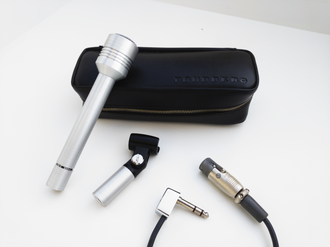
Photo: Tandberg microphone and accessories, photographed July 10, 2020; archival illustration of voice technology, not Microsoft equipment. Gutten på Hemsen, CC BY 4.0; official resized rendition, no local alteration. [8,9]
AI-assisted editorial by Codex. Educational information, not personalized investment advice. Early assignment is possible. Scenarios exclude fees and taxes; no trades are executed.
Sources
- [1]New voice models · October 1 / Nouveaux modèles vocaux · 1er octobre — Microsoft AI · Accessed 2026-10-02 · Tier 1
- [2]Kodiak and AWS · October 1 / Kodiak et AWS · 1er octobre — AWS · Accessed 2026-10-02 · Tier 1
- [3]Microsoft FY26 Q4 / T4 exercice 2026 — Microsoft · Accessed 2026-10-02 · Tier 1
- [4]Apple FY26 Q3 / T3 exercice 2026 — Apple · Accessed 2026-10-02 · Tier 1
- [5]Meta Q2 2026 / T2 2026 — Meta · Accessed 2026-10-02 · Tier 1
- [6]October release calendar / Calendrier des publications d’octobre — BLS · Accessed 2026-10-02 · Tier 1
- [7]Cash-secured put mechanics / Put garanti en espèces — OIC · Accessed 2026-10-02 · Tier 1
- [8]Tandberg microphone · July 10, 2020 / micro · 10 juillet 2020 — Gutten på Hemsen / Wikimedia Commons · Accessed 2026-10-02 · Tier 1
- [9]Photo license / Licence photo · CC BY 4.0 — Creative Commons · Accessed 2026-10-02 · Tier 1
- [10]MSFT daily completed sessions / Séances complètes — Yahoo Finance · Accessed 2026-10-02 · Tier 2
- [11]MSFT October 1 options / Options du 1er octobre — Cboe · Accessed 2026-10-02 · Tier 1
- [12]AAPL daily completed sessions / Séances complètes — Yahoo Finance · Accessed 2026-10-02 · Tier 2
- [13]AAPL October 1 options / Options du 1er octobre — Cboe · Accessed 2026-10-02 · Tier 1
- [14]META daily completed sessions / Séances complètes — Yahoo Finance · Accessed 2026-10-02 · Tier 2
- [15]META October 1 options / Options du 1er octobre — Cboe · Accessed 2026-10-02 · Tier 1
- [16]Microsoft declared dividend / Dividende déclaré — Microsoft · Accessed 2026-10-02 · Tier 1
- [17]MU October 1 session / Séance du 1er octobre — Yahoo Finance · Accessed 2026-10-02 · Tier 2
- [18]Micron September 30 results / Résultats du 30 septembre — Micron · Accessed 2026-10-02 · Tier 1
This content is for informational and educational purposes only and is not financial advice. Options involve risk and are not suitable for every investor. Do your own research before trading.