
MU wheel watch: $720 put leaves a 23.6% cushion
The September 18 $720 put carried a $37.05 reference credit and a 23.6% breakeven cushion at 11:59 a.m. ET. Micron’s low forward multiple and revenue surge meet below-normal IV and an older support shelf.
YieldCove Desk
4 min read
MU spot · 11:59 a.m. ET
$893.48 · +7.71%
RSI(14)
48.8 · neutral
Put IV vs 3-month norm
92.00% vs 96.52%–97.07%
Time to expiry
45 DTE
Reference credit
$37.05 per share
Annualized comparison
41.7%
The setup in 30 seconds
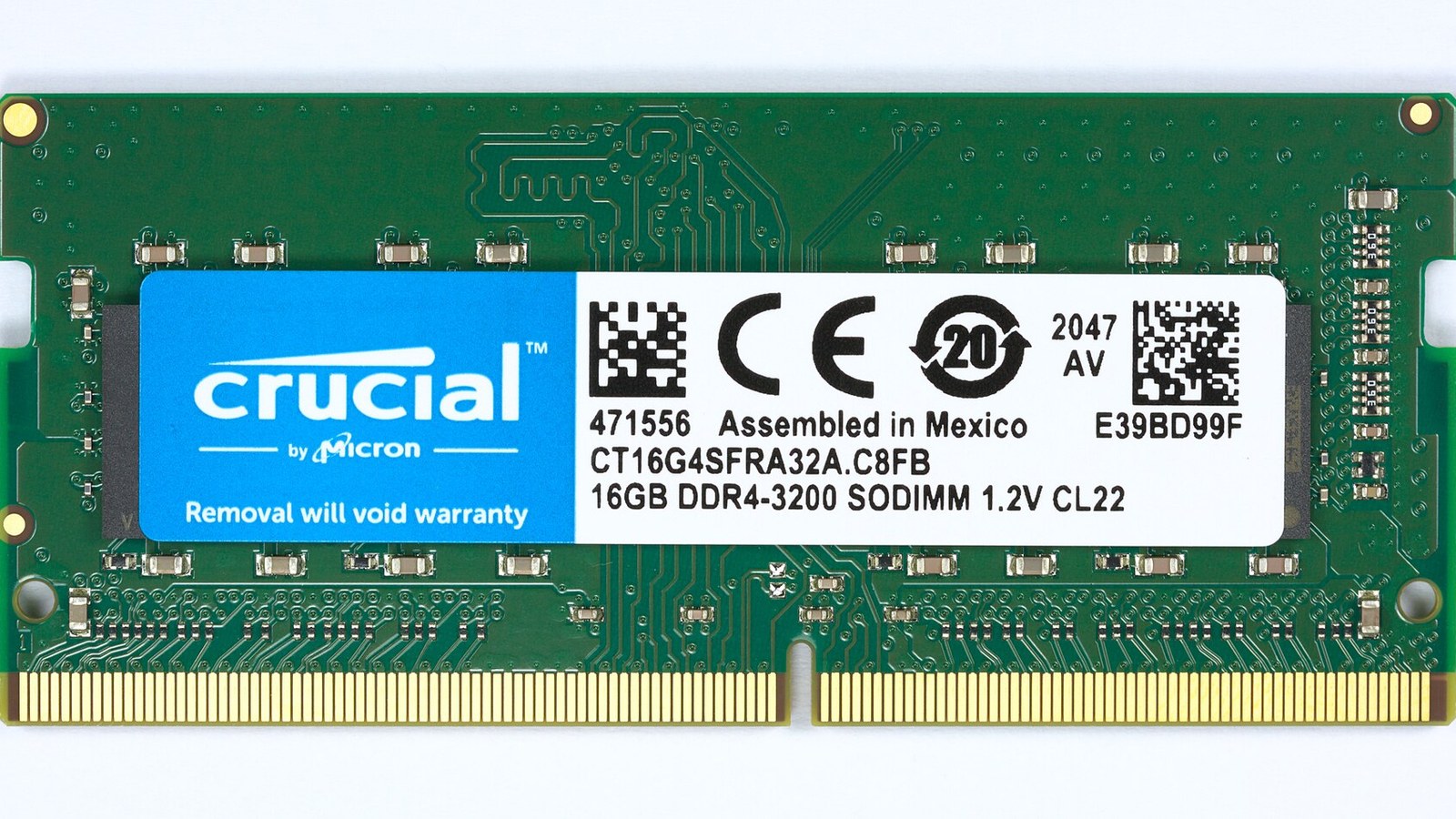
Micron makes DRAM and NAND memory used in data centres, phones and computers. At 11:59 a.m. ET on August 4, Nasdaq showed MU at $893.48, up 7.71% on the day; Barchart showed $893.64 one minute earlier. This educational setup studies the September 18 $720 cash-secured put, with 45 days to expiry (DTE) and delta near 0.196. Nasdaq and Cboe both showed $36.70 bid / $37.40 ask. Their exact $37.05 midpoint puts breakeven at $682.95, or 23.6% below the reference spot. The live-entry window ends 12:30 p.m. ET. Rebuild the quote in a broker and use a limit order; a fast stock move can make this snapshot stale.
New to cash-secured puts?
Selling one put can require buying 100 shares at the strike if assigned. “Cash-secured” means reserving the full $72,000 strike collateral instead of using margin. The credit lowers the effective share cost, but MU can still fall far below breakeven.
The trade
| Field | Reference |
|---|---|
| Ticker / strategy | MU cash-secured put |
| Contract | September 18, 2026 $720 put |
| DTE / delta | 45 DTE / ~0.196 |
| Delayed market | $36.70 bid / $37.40 ask · 1.89% spread |
| Entry limit | $36.70–$37.40 per share ($3,670–$3,740 per contract); no market orders |
| Liquidity | 970 open interest · 34 contracts volume on both feeds |
| Cash reserved | $72,000 |
| Breakeven | $682.95 · 23.6% below $893.48 |
| Maximum return | 5.15% in 45 days · ~41.7% annualized comparison |
| Maximum loss | $68,295 if MU falls to $0, before fees |
Nasdaq and Cboe matched the bid, ask, open interest and volume. The 1.89% spread sits well below the 8% ceiling, while 970 open contracts and 34 contracts traded provide a usable but not bottomless market. In plain terms: the quote passed the written liquidity gate, but the order still needs a limit because a $0.70 spread equals $70 per contract.
Why this stock, why now
Technicals. The intraday RSI(14) proxy was 48.8, neutral after MU bounced from its August 3 close. At $893.48, price sat below its $901.68 20-day and $969.42 50-day averages, but above its $524.82 200-day average. Volume at 11:59 a.m. was 19.41 million, or 0.41× the prior 20-session full-day average; that partial-day comparison is not a closing forecast. The $720 strike lines up with an older $700.66–$719.00 May shelf, below the recent $737.88 low. In plain terms: the strike has distance, but its nearby support is old and must not be treated as a floor.
Valuation and growth. StockAnalysis put MU at 5.75× forward earnings, versus 32.21× for Western Digital and 23.23× for Seagate. Finviz’s independent screen showed 5.79×, 29.40× and 14.96×. Micron’s SEC-filed fiscal Q3 release reported revenue of $41.46 billion, versus $9.30 billion a year earlier, roughly 346% growth; Finviz showed 345.72% quarterly sales growth. In plain terms: the multiple looks cheap beside peers because estimates assume the memory boom lasts. A normal memory down-cycle can change those earnings faster than the share price.
Income is below its recent volatility norm
The selected put carried 92.00% IV, below AlphaQuery’s 97.07% three-month mean and Barchart’s 96.52% three-month measure. Barchart’s current weighted IV was 92.57%, at the 24th percentile of its three-month range. The exact midpoint equals 5.15% of collateral in 45 days, or 41.7% annualized as comparison math—not a forecast. The dollar credit is large mainly because the strike is $720; screens rank premium, not safety.
Calendar and catalysts. Nasdaq/Zacks and StockAnalysis both estimate earnings on September 22, four days after expiry, but Micron has not confirmed that date; the contract is outside the current estimate, not guaranteed outside the event. The latest listed ex-dividend date was July 6. This week, ISM Services is due August 5 at 10:00 a.m. ET, and the U.S. jobs report is due August 7 at 8:30 a.m. ET. SEC submissions showed no new company 8-K or 10-Q in the prior 72 hours. A secondary Nasdaq feed carried a Bank of America reiteration report, but no primary note cleared the evidence gate, so no rating or target is used. In plain terms: the memory cycle and macro data matter more than an unverified analyst target.
The exit plan
- Take profit: buy back around $18.52, roughly 50% of the exact $37.05 reference credit.
- Time exit: if unresolved, close or roll around 14–21 DTE, roughly August 28 to September 4.
- Roll trigger: if MU closes below $700 with more than 21 DTE, reassess and consider only an out-and-down roll for a credit.
- Assignment path: accept only if planned—own 100 shares at the $682.95 effective basis, then reassess covered calls.
What would invalidate this
The setup fails if the $720-put spread widens above 8%, if Nasdaq and Cboe stop matching, or if MU closes below $700 with more than 21 DTE. A break under the $682.95 breakeven means the credit no longer covers the stock loss and requires a new ownership test.
What could go wrong
- Memory-cycle reversal: DRAM pricing or AI demand can cool and erase the low forward P/E quickly.
- Support failure: the $700–$719 shelf is from May; a new selloff may ignore it and move through $682.95.
- Capital and execution risk: memory fabs need heavy spending, while the $3,705 midpoint credit cannot offset a large stock drawdown.
Beginner corner
DTE means days to expiry. Delta measures option-price sensitivity, not a probability promise. IV is implied volatility. Breakeven is strike minus credit. Assignment means buying 100 shares per contract at the strike. Open interest counts outstanding contracts; volume counts contracts traded today.
Sources
- [1]U.S. market status on August 4, 2026 — Nasdaq · Accessed 2026-08-04 · Tier 1
- [2]MU live quote and market status — Nasdaq · Accessed 2026-08-04 · Tier 1
- [3]MU current quote and three-month IV statistics — Barchart · Accessed 2026-08-04 · Tier 3
- [4]MU one-year price and volume history — Nasdaq · Accessed 2026-08-04 · Tier 1
- [5]MU September listed option chain — Nasdaq · Accessed 2026-08-04 · Tier 1
- [6]MU delayed option quotes and Greeks — Cboe Global Markets · Accessed 2026-08-04 · Tier 1
- [7]MU 30-day implied-volatility history — AlphaQuery · Accessed 2026-08-04 · Tier 3
- [8]Micron valuation statistics — StockAnalysis · Accessed 2026-08-04 · Tier 3
- [9]Western Digital valuation statistics — StockAnalysis · Accessed 2026-08-04 · Tier 3
- [10]Seagate valuation statistics — StockAnalysis · Accessed 2026-08-04 · Tier 3
- [11]Micron market valuation snapshot — Finviz · Accessed 2026-08-04 · Tier 3
- [12]Western Digital market valuation snapshot — Finviz · Accessed 2026-08-04 · Tier 3
- [13]Seagate market valuation snapshot — Finviz · Accessed 2026-08-04 · Tier 3
- [14]Micron fiscal Q3 2026 results, Exhibit 99.1 — SEC EDGAR / Micron Technology · Accessed 2026-08-04 · Tier 1
- [15]MU estimated earnings date — Nasdaq / Zacks · Accessed 2026-08-04 · Tier 2
- [16]Micron estimated earnings date and valuation — StockAnalysis · Accessed 2026-08-04 · Tier 3
- [17]MU dividend history — Nasdaq · Accessed 2026-08-04 · Tier 1
- [18]Micron SEC submissions through August 4 — SEC EDGAR · Accessed 2026-08-04 · Tier 1
- [19]MU related-news and analyst-move scan — Nasdaq · Accessed 2026-08-04 · Tier 2
- [20]U.S. economic events for August 5 — Nasdaq · Accessed 2026-08-04 · Tier 2
- [21]This-week U.S. economic calendar — Fair Economy · Accessed 2026-08-04 · Tier 3
- [22]Micron DDR4 SO-DIMM photograph — Wikimedia Commons · Accessed 2026-08-04 · Tier 4
This content is for informational and educational purposes only and is not financial advice. Options involve risk and are not suitable for every investor. Do your own research before trading.
More tips from the desk

Open Interest Is Not a Queue of Buyers
Sixty contracts can trade while open interest ends exactly where it started. For wheel sellers, outstanding positions are not a promise of liquidity or an easy exit.

At Expiration, the Closing Price Is Not Confirmation
Exercise-by-exception sets a default, not a guaranteed assignment outcome. One put example separates the closing price, the holder’s choice and the full cash payment if assigned.

Put Delta Is Not an Assignment Forecast
Delta estimates price sensitivity, not a promise about assignment. A −0.30 example separates a $30 price response from the full $5,000 purchase obligation.