
ORCL wheel watch: $130 put carries earnings risk
The September 18 $130 put showed a $5.70 reference credit and a 14.7% breakeven cushion at 9:53 a.m. ET. Its implied volatility is above the three-month norm, but estimated September 8 earnings sit inside the contract.
YieldCove Desk
4 min read
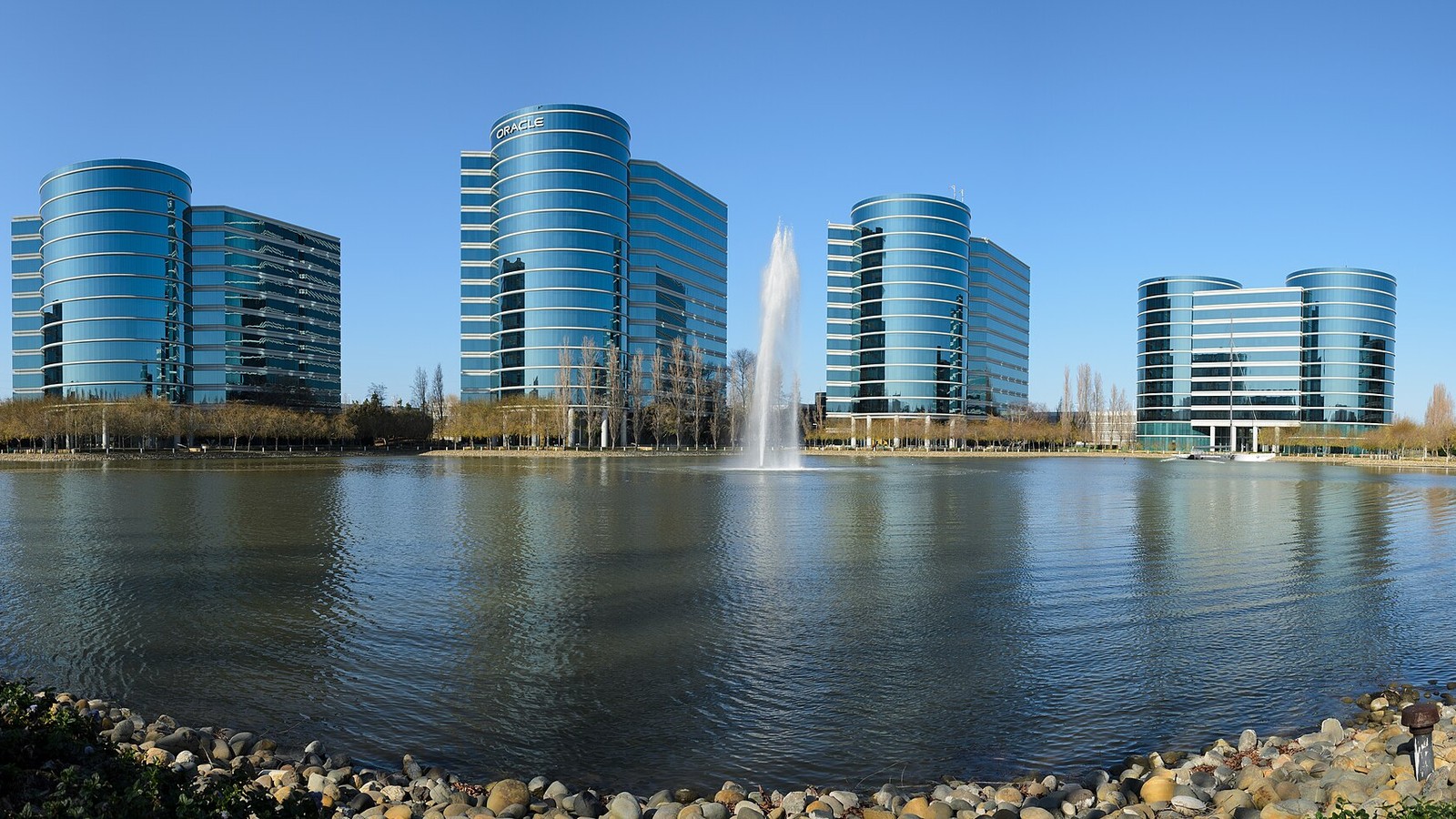
ORCL spot at 9:53 a.m. ET
$145.80
-3.48%
RSI(14), through Aug. 10
54.5 · neutral
Put IV vs 3-month norm
72.52% vs ~65%–66%
Time to expiry
38 DTE
Reference credit
$5.70 per share
Annualized comparison
42.1%
The setup in 30 seconds
Oracle sells database software, cloud infrastructure and enterprise applications. At 9:53 a.m. ET on August 11, ORCL was $145.80 on Nasdaq; Barchart showed $146.02 at 9:51 and Cboe a delayed $148.14. This educational ticket uses the September 18 $130 cash-secured put, with 38 days to expiry (DTE) and delta near 0.245. A $5.70 reference credit puts breakeven at $124.30, or 14.7% below the Nasdaq snapshot. This is an earnings-aware setup. September 8 is an estimated report date inside the contract, so the delta stays near the lower half of the allowed band. ORCL led the three-name scorecard because its premium ran above two three-month volatility norms while liquidity remained inside the 8% spread cap. The morning live-entry window ends at 10:30 a.m. ET; delayed data must be rebuilt in a broker.
New to cash-secured puts?
Selling one put creates an obligation to buy 100 shares at the strike if assigned. “Cash-secured” means reserving the full $13,000 strike collateral without margin. The credit lowers the effective share cost, but an earnings gap can still carry the stock well below breakeven.
The trade
| Field | Reference |
|---|---|
| Ticker / strategy | ORCL cash-secured put |
| Contract | September 18, 2026 $130 put |
| DTE / delta | 38 DTE / ~0.245 |
| Entry limit | $5.50–$5.90 per share ($550–$590 per contract); no market orders |
| Reference credit | $5.70 per share / $570 per contract |
| Cash reserved | $13,000 |
| Breakeven | $124.30 · 14.7% below $145.80 spot |
| Max return | 4.38% in 38 days · ~42.1% annualized comparison |
| Maximum loss | $12,430 if ORCL fell to $0, before fees |
Nasdaq and Cboe both showed $5.50 bid / $5.90 ask, 10,272 contracts of open interest and 34 traded. The 7.02% spread stayed below the 8% cap. Cboe measured delta −0.2453 and 72.52% IV. The $5.70 midpoint is a reference, not a promised fill; a limit order must be rebuilt from the live market.
Why this stock, why now
Technicals. Through August 10, RSI(14) was 54.5, a neutral reading. The 20-day, 50-day and 200-day averages were $131.34, $157.64 and $178.06. The $145.80 snapshot sat above the short average but below the two longer averages. Volume by 9:53 a.m. was 0.12× the prior 20-session full-day average. The recent $114.50 low is the nearest observed support reference below the $130 strike, while the 50-day average near $157.64 is the first trend hurdle. In plain terms: the short rebound is intact, but the longer trend has not repaired.
Valuation and growth. Two public screens put Oracle at 13.33×–18.76× forward earnings, versus 12.64×–14.18× for Salesforce and 21.29×–25.68× for Microsoft. SEC company facts show fiscal 2026 revenue of $67.357 billion, up 17.35% from $57.399 billion in fiscal 2025. In plain terms: Oracle sits between a cheaper application-software peer and a more expensive cloud leader while revenue growth has accelerated.
Income and calendar
The put’s 72.52% IV was above Barchart’s 66.08% three-month reading and AlphaQuery’s 65.12% 63-observation mean. The $5.70 credit equals 4.38% of collateral for 38 days, or 42.1% annualized as comparison math—not a forecast. September 8 after the close is an estimated, not issuer-confirmed, earnings date inside the contract. BLS and Fair Economy schedule July CPI for August 12 at 8:30 a.m. ET. The latest ex-dividend date was July 10; no future date was confirmed.
News and scorecard. Oracle’s public newsroom and SEC submission feed showed no new operating release or filing in the prior 72 hours, and no named analyst move cleared the two-source print bar. ORCL scored 60.8, ahead of MU at 48.1 and AMZN at 46.1: richer relative IV and strong contract liquidity outweighed the earnings penalty. In plain terms: option demand is paying for a known event risk, not revealing a hidden catalyst.
The exit plan
- Take profit: buy back around $2.85 after retaining about 50% of the $5.70 reference credit.
- Time exit: if unresolved, close or roll around 14–21 DTE, roughly August 28 to September 4—before the estimated earnings date.
- Roll trigger: if ORCL closes below the $124.30 breakeven with more than 21 DTE, reassess and consider only an out-and-down roll that still produces a credit.
- Assignment path: assignment means owning 100 shares at the $124.30 effective cost. Covered calls may continue the wheel, but they cannot erase an earnings gap or a stock loss.
What would invalidate this
The setup stops fitting the screen if ORCL closes below $124.30 with more than 21 DTE, if the $130-put spread widens above 8%, or if Oracle confirms earnings or guidance that materially changes the ownership case. A lower price after new information needs a fresh review, not an automatic roll.
What could go wrong
- Earnings gap: the estimated September 8 report sits inside the contract and can move ORCL through $124.30 before time decay helps.
- Trend risk: ORCL remains below the $157.64 50-day and $178.06 200-day averages; a failed rebound can revisit the $114.50 low.
- Valuation and execution: cloud expansion requires heavy investment, and the $12,430 maximum loss dwarfs the $570 credit.
Beginner corner
DTE means days to expiry. Delta measures option-price sensitivity, not a guaranteed assignment probability. IV is the option market’s volatility input. Breakeven is strike minus credit. Assignment means buying shares at the strike. A limit order sets the worst acceptable price and avoids an uncontrolled market fill.
Sources
- [1]NYSE 2026 trading hours and holidays — New York Stock Exchange · Accessed 2026-08-11 · Tier 1
- [2]U.S. market status on August 11, 2026 — Nasdaq · Accessed 2026-08-11 · Tier 1
- [3]ORCL real-time quote and market status — Nasdaq · Accessed 2026-08-11 · Tier 1
- [4]ORCL current quote and volatility statistics — Barchart · Accessed 2026-08-11 · Tier 3
- [5]ORCL one-year price and volume history — Nasdaq · Accessed 2026-08-11 · Tier 1
- [6]ORCL September listed option chain — Nasdaq · Accessed 2026-08-11 · Tier 1
- [7]ORCL delayed options and Greeks — Cboe Global Markets · Accessed 2026-08-11 · Tier 1
- [8]ORCL 30-day implied-volatility history — AlphaQuery · Accessed 2026-08-11 · Tier 3
- [9]Oracle valuation statistics — StockAnalysis · Accessed 2026-08-11 · Tier 3
- [10]Salesforce valuation statistics — StockAnalysis · Accessed 2026-08-11 · Tier 3
- [11]Microsoft valuation statistics — StockAnalysis · Accessed 2026-08-11 · Tier 3
- [12]Oracle valuation snapshot — Finviz · Accessed 2026-08-11 · Tier 3
- [13]Salesforce valuation snapshot — Finviz · Accessed 2026-08-11 · Tier 3
- [14]Microsoft valuation snapshot — Finviz · Accessed 2026-08-11 · Tier 3
- [15]Oracle fiscal 2026 company facts — SEC EDGAR · Accessed 2026-08-11 · Tier 1
- [16]ORCL estimated earnings date — Nasdaq / Zacks · Accessed 2026-08-11 · Tier 2
- [17]ORCL dividend history — Nasdaq · Accessed 2026-08-11 · Tier 1
- [18]August 2026 release calendar — U.S. Bureau of Labor Statistics · Accessed 2026-08-11 · Tier 1
- [19]This-week economic calendar — Fair Economy · Accessed 2026-08-11 · Tier 3
- [20]Oracle newsroom — Oracle · Accessed 2026-08-11 · Tier 1
- [21]Oracle recent SEC submissions — SEC EDGAR · Accessed 2026-08-11 · Tier 1
- [22]ORCL related-news and analyst-move scan — Nasdaq · Accessed 2026-08-11 · Tier 2
- [23]Oracle Redwood Shores headquarters panorama — Wikimedia Commons · Accessed 2026-08-11 · Tier 4
This content is for informational and educational purposes only and is not financial advice. Options involve risk and are not suitable for every investor. Do your own research before trading.
More tips from the desk

Wheel screen says wait: 1 line, 0 complete spot checks
One PLTR put cleared the mechanical option gates, but it lacked the complete independent spot confirmation required for entry math. No premium or expected fill is published from the 9:52 a.m. ET snapshot.
Wheel screen says wait: 2 lines, 0 complete spot checks
Two TSLA puts cleared the mechanical option gates, but neither had the complete independent spot confirmation required for entry math. No premium or expected fill is published from the 9:53 a.m. ET snapshot.
CRDO wheel watch: $200 put, 19.4% cushion, earnings inside
CRDO near $234.04 shows a Sep 18 $200 cash-secured put around $11.25 mid (5.62% in 30 days; ~68% annualized as comparison math) and breakeven $188.75 (~19.4% below spot). Sep 1 after-close earnings fall inside the window, so delta stays near the bottom of the house band on delayed public data.