
Wheel screen says wait: no contract clears liquidity
At 9:51 a.m. ET, none of 11 eligible watchlist names had a 30–45 DTE put clear every hard gate on both Nasdaq and Cboe. AAPL came closest, while GOOGL and DRAM remained too wide, so no contract ticket is published.
YieldCove Desk
4 min read
Eligible watchlist names
11 after dedupe
Contracts passing every gate
0
AAPL closest spread
8.82% · max 8%
GOOGL closest spread
16.22%
DRAM closest spread
14.06%
Published contract today
None
The setup in 30 seconds
This morning’s wheel screen found no complete setup. Eddie’s live watchlist contained 21 names. After removing the lead ticker from each of the last ten Tips, 11 names remained eligible. At the 9:51 a.m. ET snapshot, not one had a 30–45 DTE put clear every liquidity, delta, return and cushion gate on both Nasdaq and Cboe. The closest lines were AAPL, GOOGL and DRAM, but “closest” is not the same as qualified. AAPL missed the spread limit and the 12% annualized return comparison; GOOGL and DRAM had spreads far above the 8% ceiling. DRAM also lacked a matching Nasdaq chain row. The morning evaluation window ends at 10:30 a.m. ET. Delayed quotes must always be rebuilt in a broker, but there is no contract ticket to rebuild today.
New to cash-secured puts?
Selling one put creates an obligation to buy 100 shares at the strike if assigned. “Cash-secured” means reserving the full strike collateral instead of borrowing. A wide bid/ask spread can erase much of the quoted premium before the trade even starts, so waiting for a cleaner market is part of risk control.
What the screen found
| Screen step | Result | Why it matters |
|---|---|---|
| Live watchlist | 21 tickers | The universe came from Eddie’s current YieldCove watchlist. |
| Last-10 Tip dedupe | 10 excluded | SPCX, AMKR, TSLA, META, NBIS, AMZN, MRVL, MU, PLTR and ORCL were not reused. |
| Eligible universe | 11 tickers | AAPL, AEHR, ASTS, CRDO, CRWV, DRAM, GOOGL, HOOD, INTC, MSFT and RKLB. |
| Mechanical pass | 0 contracts | No line cleared every hard gate on both option feeds. |
| Public ticket | None | No strike, credit or entry range is presented as a setup. |
The screen required 30–45 DTE, delta from 0.15 to 0.30, at least 500 contracts of open interest, a spread no wider than 8% of midpoint, at least 12% annualized return-on-collateral comparison math, and roughly 8% or more breakeven cushion. Each contract also needed a matching Nasdaq row and Cboe quote. Those rules are designed to reject a tempting premium when the market around it is too thin or too uncertain.
The three closest lines still failed
AAPL came nearest. The August 28 $300 put had 35 DTE, delta 0.1887 and 920 contracts of open interest. Cboe showed a $3.25–$3.55 market, an 8.82% spread; Nasdaq showed $3.20–$3.50, or 8.96%. Its midpoint implied 11.82% annualized comparison math and a 9.26% breakeven cushion. In plain terms: the cushion passed, but both the spread and return gates missed.
GOOGL paid enough on paper but traded too wide. Its August 28 $300 put had 35 DTE, delta 0.2365, 723 open contracts and a $4.25–$5.00 market on both feeds. That is a 16.22% spread, even though midpoint math reached 16.08% annualized with an 8.24% cushion. In plain terms: a wide market can turn a precise-looking midpoint into a price that may not be available.
DRAM lacked a clean second market. Its August 28 $45 put had 35 DTE, delta 0.2100, 911 open contracts on Cboe and a $2.38–$2.74 market. The spread was 14.06%, already a fail, and Nasdaq returned no matching chain row. In plain terms: one delayed feed cannot support a public ticket when the required corroboration is missing.
Why the 8% spread ceiling matters
The spread is measured as ask minus bid divided by midpoint. On GOOGL, the $0.75 gap around a $4.625 midpoint equals 16.22%. That gap is not guaranteed slippage, but it shows why midpoint return math can overstate the practical entry when the market is wide.
The re-screen plan
- Liquidity first: require at least 500 open contracts and a spread at or below 8% on both feeds.
- No midpoint rescue: do not publish an entry because annualized math looks attractive when the actual market is too wide.
- Cross-provider match: require the same expiry and strike on Nasdaq and Cboe before quoting a public contract.
- Fresh rebuild: repeat the full 30–45 DTE screen after quotes settle; never carry today’s delayed numbers into another slot.
What would change the no-setup result
A later screen can publish only if one watchlist name clears every hard gate and the full technical, volatility, valuation and calendar dossier also verifies. A narrower spread or higher open interest may change the candidate set; premium alone does not. The screen ranks compensation for risk, not safety.
What could go wrong by forcing it
- Execution drag: paying near the ask in a wide market can reduce the credit before the position begins.
- False precision: using a midpoint that neither feed supports as an executable entry can overstate both return and cushion.
- Thin-market exit: a contract that is difficult to enter may also be expensive to buy back or roll when the underlying moves.
Beginner corner
DTE means days to expiry. Delta is an option sensitivity estimate, not a probability guarantee. Open interest counts outstanding contracts. The bid is what buyers offer; the ask is what sellers request; the midpoint sits between them. Breakeven cushion is the percentage gap between spot and strike minus credit. Annualized return is comparison math, not a forecast.
Sources
- [1]NYSE 2026 holidays and trading hours — New York Stock Exchange · Accessed 2026-07-24 · Tier 1
- [2]AAPL August option chain — Nasdaq · Accessed 2026-07-24 · Tier 1
- [3]AAPL delayed option quotes and Greeks — Cboe · Accessed 2026-07-24 · Tier 1
- [4]GOOGL August option chain — Nasdaq · Accessed 2026-07-24 · Tier 1
- [5]GOOGL delayed option quotes and Greeks — Cboe · Accessed 2026-07-24 · Tier 1
- [6]DRAM August option chain — Nasdaq · Accessed 2026-07-24 · Tier 1
- [7]DRAM delayed option quotes and Greeks — Cboe · Accessed 2026-07-24 · Tier 1
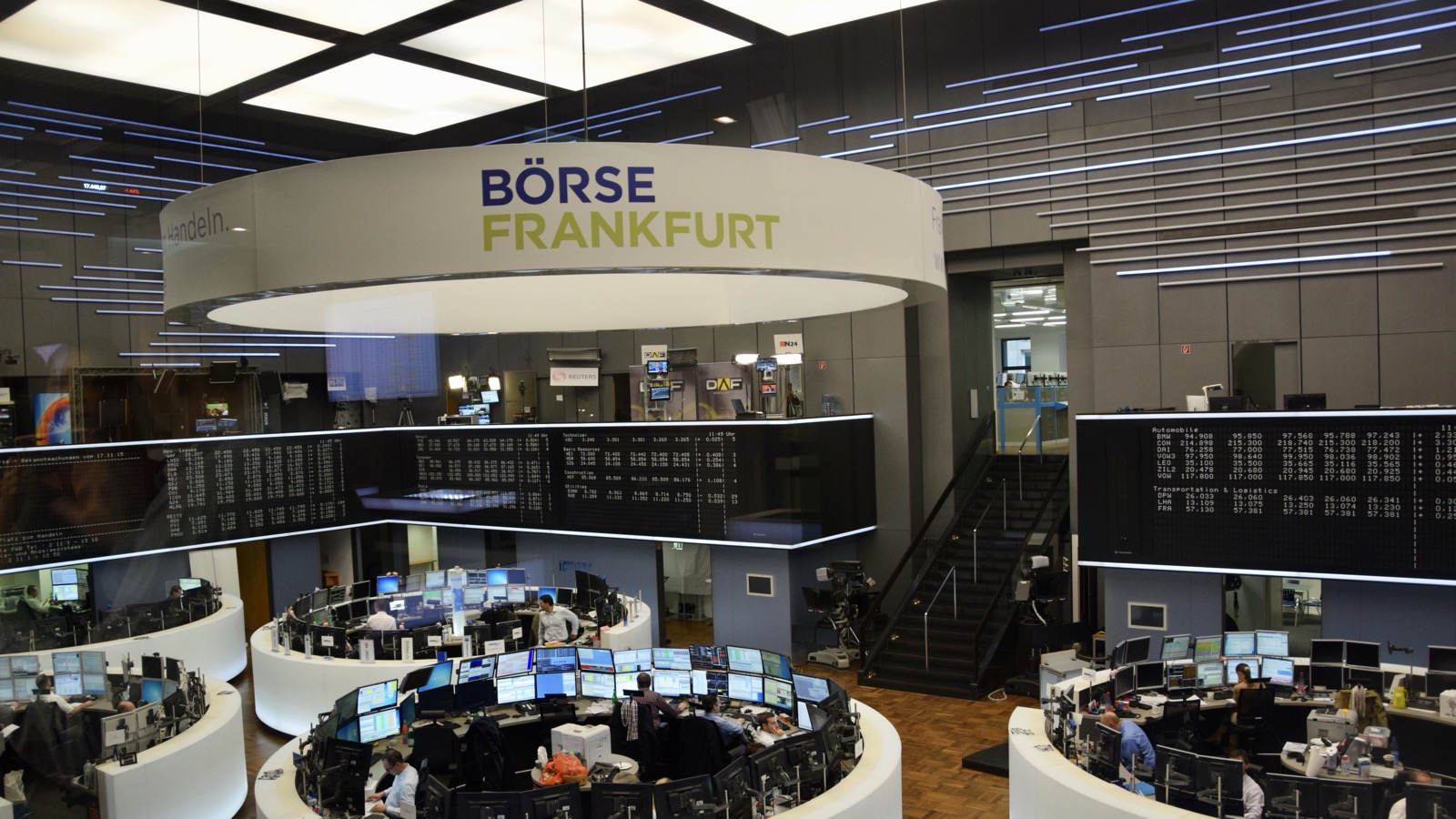
- [8]Frankfurt Stock Exchange trading-floor photograph — Wikimedia Commons · Accessed 2026-07-24 · Tier 4
This content is for informational and educational purposes only and is not financial advice. Options involve risk and are not suitable for every investor. Do your own research before trading.
More tips from the desk
Open Interest Is Not a Queue of Buyers
Sixty contracts can trade while open interest ends exactly where it started. For wheel sellers, outstanding positions are not a promise of liquidity or an easy exit.

At Expiration, the Closing Price Is Not Confirmation
Exercise-by-exception sets a default, not a guaranteed assignment outcome. One put example separates the closing price, the holder’s choice and the full cash payment if assigned.
Put Delta Is Not an Assignment Forecast
Delta estimates price sensitivity, not a promise about assignment. A −0.30 example separates a $30 price response from the full $5,000 purchase obligation.