
A defensive market tape meets selective retail conviction
Equal-weight stocks lagged on September 8 while corporate-bond proxies barely moved. Reddit discussion paired quality-stock conviction with concern about concentration.
YieldCove Desk
4 min read
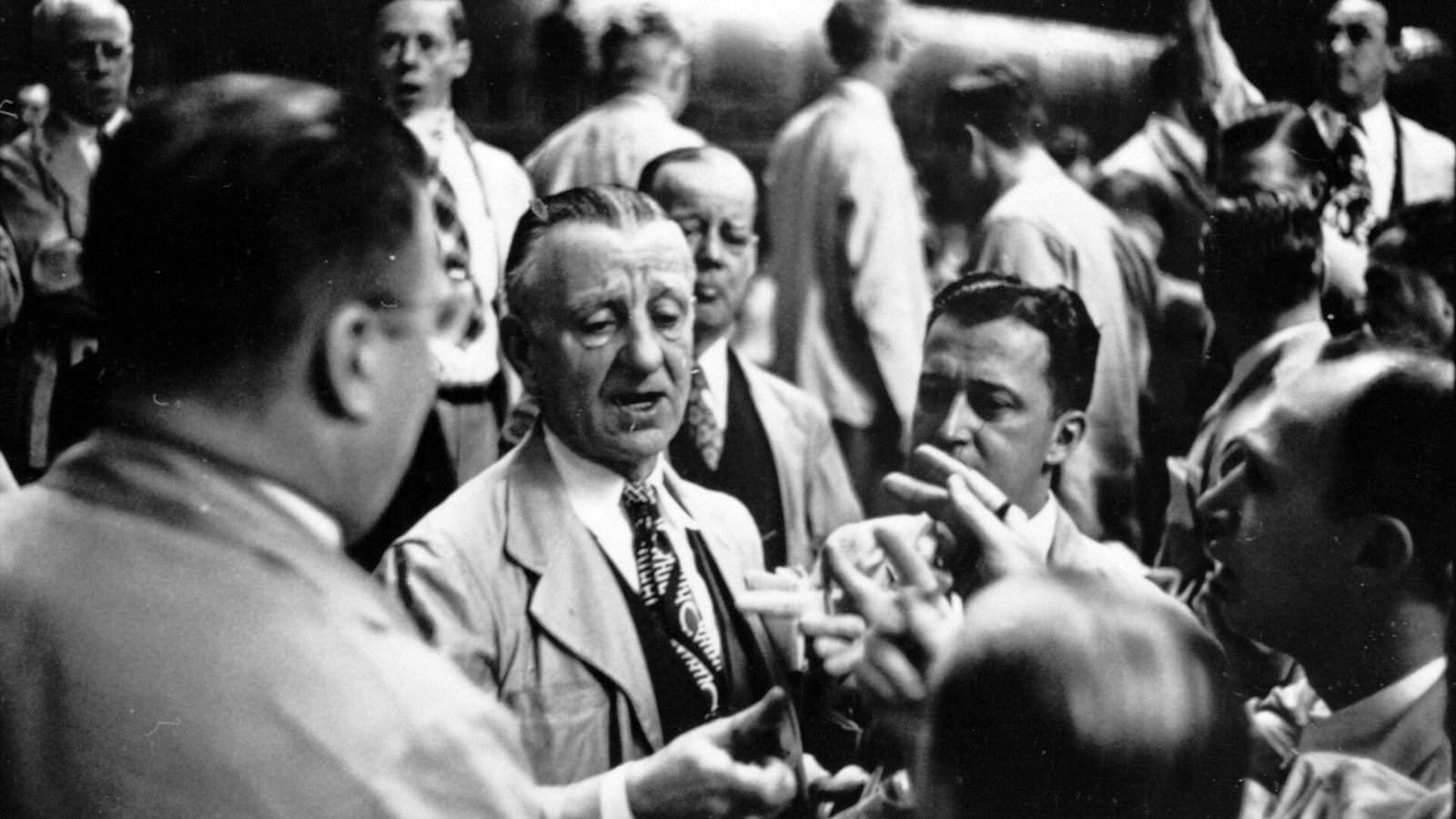
Before the September 9, 2026 cash session, the useful distinction is between a defensive market tape and selective conviction in individual businesses. September 8 completed-session prices show weaker equal-weight participation, comparatively resilient technology exposure and little movement in the corporate-bond proxies. That combination deserves caution, but it does not establish a broad credit event or a unified institutional retreat. Retail discussion, meanwhile, includes enthusiasm for perceived quality bargains alongside discomfort about concentration. Those are different questions from whether the market is ready to rise today.
The scoreboard: participation matters more than the headline
$SPY · September 8 close
$765.96
-0.55% vs September 4
$RSP · September 8 close
$216.73
-1.04% vs September 4
$VIX · September 8 close
15.72
Index points
| ETF | Market lens | Close | Price change |
|---|---|---|---|
| $SPY | Capitalization-weighted large caps | $765.96 | -0.55% |
| $QQQ | Nasdaq-100 exposure | $718.36 | -0.08% |
| $IWM | Small caps | $294.67 | -0.45% |
| $DIA | Dow exposure | $528.03 | -1.13% |
| $RSP | Equal-weight large caps | $216.73 | -1.04% |
| $HYG | High-yield corporate bonds | $79.12 | -0.05% |
| $LQD | Investment-grade corporate bonds | $105.48 | +0.00% |
$RSP fell 1.04% while $SPY lost 0.55%, leaving the equal-weight fund behind by 0.49 percentage points. $QQQ slipped only 0.08%; $IWM declined 0.45% and $DIA lost 1.13%. The important comparison is not simply red versus green. Relatively durable Nasdaq exposure coexisted with weaker participation elsewhere. YieldCove reads that as fragile leadership rather than evidence that every risk-sensitive corner is being liquidated. These are fund price returns, not total returns, and a single session cannot establish a lasting rotation.
Institutional signals: hedging is not the same as selling
Cboe’s September 8 options statistics put the total put/call volume ratio at 0.80, the equity ratio at 0.48 and the combined $SPX + $SPXW ratio at 1.20. Calls outnumbered puts in the equity category, while puts outnumbered calls in that index category. The split is consistent with different uses of single-stock and index options. It is not a census of bullish households versus bearish institutions: volumes do not reveal whether the initiating trade opened or closed exposure, and a put can hedge an existing long portfolio.
The September 8 $VIX close was 15.72. That is a measure of option-implied volatility, not a probability that stocks decline. Read beside the uneven equity tape, it supports watching the price of protection rather than treating a lower-looking volatility number as immunity from losses. None of these observations identifies who bought protection or why. The institutional interpretation is therefore deliberately conditional: hedging demand and continued stock ownership can coexist, and apparent disagreement between price and options activity need not be a contradiction.
Rates and credit: pressure, but not corroborated panic
The Treasury’s September 8 curve shows the 2-year yield at 4.39%, the 10-year at 4.80% and the 30-year at 5.25%. The 10-year minus 2-year gap was 41 basis points. Against September 4, the first two yields increased by 2 basis points each and the longest by 1 basis point. This is a valuation hurdle, not proof of a particular policy decision: higher discount rates can make distant profits less valuable even when a company’s business narrative remains attractive.
Corporate-bond prices offered a less alarmed comparison. $HYG lost 0.05% to $79.12 and $LQD was unchanged at $105.48. Those modest moves are a counterweight to the equity weakness, not a declaration that credit risk disappeared. Fund prices combine several influences, including interest-rate sensitivity and credit conditions; they are not a direct spread series. YieldCove would require broader deterioration before describing this as a credit-led risk-off episode. For now, the distinction between weaker stocks and relatively stable bond proxies matters.
Retail pulse: business conviction versus portfolio discomfort
In September 8–9 Reddit discussion, an r/stocks contributor framed a quality-stock ranking around whether disliked businesses already reflected their risks. Another questioned concentration and the structure of the S&P 500. An r/investing discussion considered moving gains above a personal goal into bonds or cash. Together, these examples show bottom-up conviction alongside concern about portfolio construction. They are non-representative opinions, not evidence of aggregate buying, selling or a retail consensus. These views can change quickly as prices and business expectations evolve.
The useful retail question is whether a compelling business can still be an uncomfortable holding at its prevailing price or portfolio weight. That question fits the market divergence: strong enthusiasm for selected companies does not guarantee broad participation. Conversely, concentration worries do not prove that enthusiastic investors have sold. Social conviction can persist through weak prices, and cautious portfolio language can coexist with equity ownership. Treat the narratives as competing interpretations rather than a tradable vote count.
Where the signals agree—and where they do not
| Question | Market evidence | Retail narrative | Interpretation |
|---|---|---|---|
| Is confidence broad? | Equal-weight exposure lagged capitalization weight | Quality-bargain arguments coexist with concentration concerns | Selective conviction, not uniform optimism |
| Is this a credit event? | Corporate-bond proxies moved little | Some discussion weighs bonds and cash against stocks | Caution is visible; systemic stress is not established |
| Do options settle the debate? | Index and equity put/call ratios diverged | No representative retail positioning measure | Different instruments can serve different purposes |
What would change the reading
A more constructive picture would pair firmer equal-weight participation with durable small-cap support and steady corporate-bond prices. A more defensive one would combine renewed breadth weakness with falling credit proxies and a higher cost of protection. These are conditions, not forecasts. The sequence also matters: an isolated index rebound is less persuasive than improvement across several independent market lenses. Equally, a weak session followed by stabilization would argue against extrapolating yesterday’s discomfort into an enduring regime.
Counterargument and bottom line
The strongest counterargument is that this was ordinary dispersion rather than a meaningful sentiment shift. Technology resilience and relatively stable corporate bonds support that possibility. A single day’s equal-weight shortfall cannot resolve it, and fund-level prices obscure differences among constituents. YieldCove’s reading is cautiously selective: the tape looks less broad than a resilient growth sleeve might suggest, while the credit comparison resists a panic label. Retail business conviction and portfolio unease can both be rational responses to that mixed picture. None of this is a personalized allocation recommendation or an instruction to transact.
Sources
- [1]$SPY historical prices / Cours historiques — Yahoo Finance · Accessed 2026-09-09T09:04:44.544100+00:00 · Tier 2
- [2]$QQQ historical prices / Cours historiques — Yahoo Finance · Accessed 2026-09-09T09:04:44.544497+00:00 · Tier 2
- [3]$IWM historical prices / Cours historiques — Yahoo Finance · Accessed 2026-09-09T09:04:44.544886+00:00 · Tier 2
- [4]$DIA historical prices / Cours historiques — Yahoo Finance · Accessed 2026-09-09T09:04:44.545274+00:00 · Tier 2
- [5]$RSP historical prices / Cours historiques — Yahoo Finance · Accessed 2026-09-09T09:04:44.545369+00:00 · Tier 2
- [6]$HYG historical prices / Cours historiques — Yahoo Finance · Accessed 2026-09-09T09:04:44.545937+00:00 · Tier 2
- [7]$LQD historical prices / Cours historiques — Yahoo Finance · Accessed 2026-09-09T09:04:44.546265+00:00 · Tier 2
- [8]ETF closing prices / Cours de clôture des FNB — TradingView · Accessed 2026-09-09T09:04:44.546588+00:00 · Tier 3
- [9]$VIX historical index levels / Historique de l’indice — Cboe Global Markets · Accessed 2026-09-09T09:04:44.712357+00:00 · Tier 1
- [10]Options market statistics, September 8 / Statistiques des options, 8 septembre — Cboe Global Markets · Accessed 2026-09-09T09:04:44.713798+00:00 · Tier 1
- [11]Daily Treasury par yields / Rendements quotidiens du Trésor — U.S. Department of the Treasury · Accessed 2026-09-09T09:04:44.717888+00:00 · Tier 1
- [12]r/stocks investor discussion / Échanges entre investisseurs — Reddit · Accessed 2026-09-09T09:04:44.826345+00:00 · Tier 4
- [13]r/investing portfolio discussion / Échanges sur les portefeuilles — Reddit · Accessed 2026-09-09T09:08:28.077574+00:00 · Tier 4
- [14]$VIX index overview / Présentation de l’indice — Cboe Global Markets · Accessed 2026-09-09T09:14:22.769898+00:00 · Tier 1
This content is for informational and educational purposes only and is not financial advice. Options involve risk and are not suitable for every investor. Do your own research before trading.
Read next

Relief spreads, but index options resist the all-clear
The rebound widened as volatility fell, yet index options remained more put-heavy than stock options. For premium sellers, calmer prices do not establish a one-way market.
Tech holds its ground, but market confidence stays narrow
Technology-heavy shares held steady while broader equity measures fell. For option sellers, that split makes participation and downside exposure more useful than a single bullish or bearish sentiment label.
Stock losses expose a split in Fed-day risk appetite
Equity losses coexist with call-heavy stock options and put-heavy index activity. For option sellers, the split shows why trading volume is not a reliable shortcut to investor conviction.