
Stock losses expose a split in Fed-day risk appetite
Equity losses coexist with call-heavy stock options and put-heavy index activity. For option sellers, the split shows why trading volume is not a reliable shortcut to investor conviction.
YieldCove Desk
4 min read
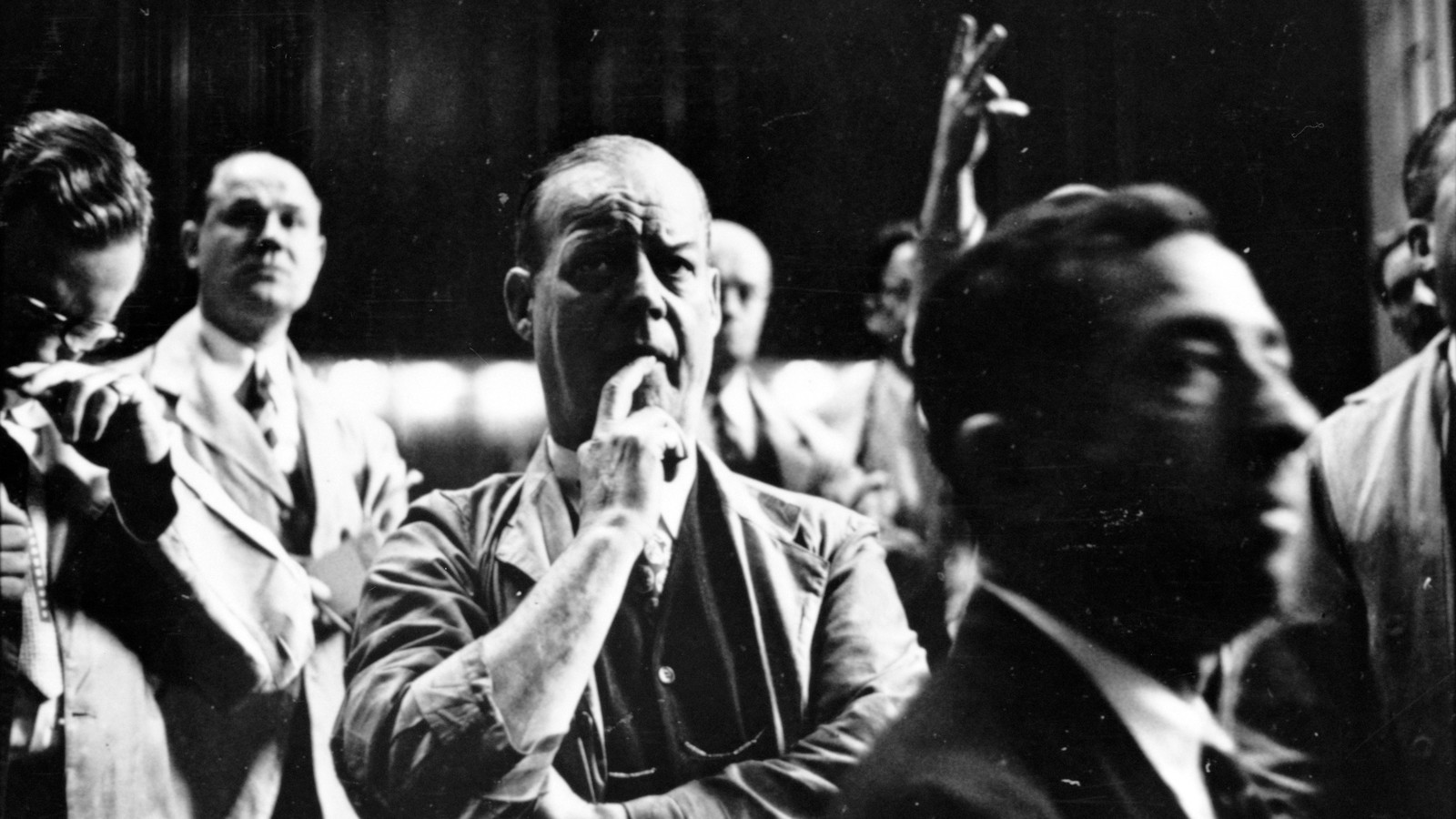
Stocks are entering the Fed decision with a split risk message, not a clean fear-versus-greed verdict. Losses reached both capitalization-weighted and equal-weight benchmarks, yet equity options remained call-heavy while S&P index options were put-heavy. For option sellers, the tension is between continued appetite for upside and a market that still prices uncertainty.
This morning assessment is dated 2026-09-16, with dates stated in America/Toronto, Eastern Time. Market figures refer to the completed 2026-09-15 session; daily changes are against 2026-09-14. Fund prices are in U.S. dollars and are historical closing observations, not live executable quotes. The Federal Reserve calendar places its policy meeting on 2026-09-15–2026-09-16, with economic projections.
Equal weight — $RSP
−0.49%
2026-09-15 vs 2026-09-14
Equity put/call volume
0.56
Cboe · 2026-09-15
S&P index put/call volume
1.20
$SPX + $SPXW · 2026-09-15
Institutional lens: weakness beyond the tech-heavy benchmark
$SPY fell 0.46% and equal-weight $RSP lost 0.49%. That near-match matters: the retreat was not confined to the largest index constituents. Technology-heavy $QQQ declined 0.65%, while $DIA fell 0.62%. These funds do not cover every stock, but the shared direction weakens the comforting interpretation that the problem belongs only to one concentrated corner of equities.
| Fund | Close (USD) | Daily change | Exposure |
|---|---|---|---|
| $SPY | 757.39 | -0.46% | Capitalization-weighted large caps |
| $RSP | 213.96 | -0.49% | Equal-weight large caps |
| $QQQ | 704.54 | -0.65% | Nasdaq-heavy exposure |
| $DIA | 521.23 | -0.62% | Dow industrials |
For institutional portfolios, these are price and diversification signals, not a record of what institutions bought. Index weights, sector exposure and individual-company moves can all affect relative performance. The defensible conclusion is broader pressure across these benchmarks. It is not proof of fund withdrawals, forced selling or a coordinated shift to cash. A falling market can contain buyers with very different horizons and motives.
The options split is real; the ownership story is not established
Cboe’s equity put/call volume ratio was 0.56, compared with 1.20 for $SPX and $SPXW combined. Calls therefore outnumbered puts in the equity category, while puts outnumbered calls in that index category. The all-products ratio was 0.86 and the index-options ratio was 1.01. Different parts of the options market were carrying different mixes of activity.
| Category | Put/call ratio |
|---|---|
| All products | 0.86 |
| Index options | 1.01 |
| Equity options | 0.56 |
| $SPX + $SPXW | 1.20 |
It would be tempting to call that optimistic retail against cautious institutions. The ratios cannot carry that claim. They do not identify investor type, distinguish purchases from sales, or reveal whether a trade opened exposure, closed it or formed part of a spread. Call volume can include covered-call selling; put volume can include put selling. The split is evidence of instrument-level activity, not a vote with identifiable voters.
The $VIX closed at 17.20, up 0.58% from 17.10, but below its 17.84 close on 2026-09-10. This was a modest further repricing of expected volatility rather than an explosive jump. The index reflects volatility expectations embedded in S&P 500 options; it is not a forecast that stocks must fall.
| Session | Close |
|---|---|
| 2026-09-09 | 16.46 |
| 2026-09-10 | 17.84 |
| 2026-09-11 | 15.84 |
| 2026-09-14 | 17.10 |
| 2026-09-15 | 17.20 |
Rates and credit add constraints, not a crash verdict
The Treasury two-year par yield rose 2 basis points to 4.67%; the ten-year rose 3 basis points to 5.00%. Their spread was 33 basis points. High-yield bond fund $HYG lost 0.19%, versus 0.02% for investment-grade $LQD. That relative weakness deserves attention, but fund prices also reflect duration and distributions. It is not a clean credit-spread measurement or proof of worsening defaults.
Retail pulse: uncertainty about the reaction, not just the decision
A discussion in r/stocks asks which Fed outcome would actually produce a rally, weighing the possibility that either a hike or a hold could disappoint through a different channel. Another expresses interest in taking individual-stock risk alongside existing fund holdings. Those are different questions: uncertainty about the next market reaction does not necessarily extinguish the desire to own risky assets.
In r/Bogleheads, concern about holding leveraged funds sits beside a separate discussion questioning bonds’ long-term purchasing-power protection. The common thread is discomfort with the shape of risk, not agreement about where markets go next. These individual views are not a retail consensus. Nor do concerns about leverage establish actual losses, and a question about bonds does not validate a historical return claim.
Agreement and divergence
| Issue | Market signal | Retail discussion | Interpretation |
|---|---|---|---|
| Equity risk | $SPY and $RSP both declined | Interest in individual stocks persists | Risk appetite coexists with losses |
| Uncertainty | $VIX higher; index puts exceed calls | Fed-reaction ambiguity | Caution without a single forecast |
| Portfolio defence | Treasury yields rose | Leverage and bond purchasing-power concerns | Different risks need different lenses |
The premium seller’s distinction
Receiving a premium is compensation for an obligation, not evidence that the obligation is cheap. Broader equity weakness makes a bullish market label less useful; a call-heavy tape does not make downside exposure disappear. Higher implied volatility can support premiums with other inputs unchanged, but individual contracts still depend on strike, expiry, the underlying and liquidity. No single index-level ratio settles that trade-off.
Activity is not conviction
The useful distinction is between the quantity of options traded and the risk investors ultimately retain. Neither a put/call ratio nor a social narrative reveals the whole portfolio.
What changes the picture—and the counterargument
The next checkpoint is the 2026-09-16 Fed decision and projections, then the way equities, yields and volatility respond together. A recovery shared by $SPY and $RSP, with easing volatility, would weaken the broader-pressure interpretation. A rebound concentrated in the biggest names while equal weight struggles would be less persuasive. Renewed equity losses alongside higher volatility would instead strengthen the caution case.
The counterargument is important: these were moderate daily losses, and the $VIX remained below its recent high close. Options volume can reflect routine execution and hedging rather than a new directional conviction. YieldCove’s reading is selective risk-taking under broader pressure, not capitulation. That conclusion depends on price participation and the persistence of stress, not the loudest bullish or bearish story.
Sources
- [1]ETF session closes / Clôtures des FNB — CNBC · Accessed 2026-09-16T09:06:00.214188+00:00 · Tier 2
- [2]ETF session closes / Clôtures des FNB — TradingView · Accessed 2026-09-16T09:06:00.214800+00:00 · Tier 2
- [3]Daily $VIX history / Historique quotidien du $VIX — Cboe Global Markets · Accessed 2026-09-16T09:06:00.215376+00:00 · Tier 1
- [4]Options volumes and put/call ratios / Volumes et ratios puts/calls — Cboe Global Markets · Accessed 2026-09-16T09:06:00.216769+00:00 · Tier 1
- [5]Treasury par yields / Taux au pair du Trésor — U.S. Treasury · Accessed 2026-09-16T09:06:00.216990+00:00 · Tier 1
- [6]$VIX definition / Définition du $VIX — Cboe Global Markets · Accessed 2026-09-16T09:06:00.216084+00:00 · Tier 1
- [7]FOMC meeting calendar / Calendrier des réunions du FOMC — Federal Reserve · Accessed 2026-09-16T09:07:11.755572+00:00 · Tier 1
- [8]Policy reaction debate / Débat sur la réaction à la politique monétaire — Reddit — r/stocks · Accessed 2026-09-16T09:06:00.412980+00:00 · Tier 4
- [9]Individual-stock risk appetite / Appétit pour le risque sur actions individuelles — Reddit — r/stocks · Accessed 2026-09-16T09:06:00.412980+00:00 · Tier 4
- [10]Concern about leveraged funds / Inquiétude sur les fonds à effet de levier — Reddit — r/Bogleheads · Accessed 2026-09-16T09:07:11.754612+00:00 · Tier 4
- [11]Bond purchasing-power concern / Inquiétude sur le pouvoir d’achat obligataire — Reddit — r/Bogleheads · Accessed 2026-09-16T09:07:11.754612+00:00 · Tier 4
- [12]Chicago Board of Trade, 1949 — archival photo / photographie d’archives — Stanley Kubrick / LOOK, Library of Congress via Wikimedia Commons · Accessed 2026-09-16T09:09:47.199820+00:00 · Tier 1
- [13]Photograph public-domain dedication / Dédicace de la photographie au domaine public — Wikimedia Commons — Licensing · Accessed 2026-09-16T09:09:47.199820+00:00 · Tier 1
This content is for informational and educational purposes only and is not financial advice. Options involve risk and are not suitable for every investor. Do your own research before trading.
Read next

Relief spreads, but index options resist the all-clear
The rebound widened as volatility fell, yet index options remained more put-heavy than stock options. For premium sellers, calmer prices do not establish a one-way market.
Tech holds its ground, but market confidence stays narrow
Technology-heavy shares held steady while broader equity measures fell. For option sellers, that split makes participation and downside exposure more useful than a single bullish or bearish sentiment label.

Equal-weight resilience challenges the tech-led retreat
Equal-weight stocks held up as technology shares fell and volatility rose. For option sellers, the split exposes concentration risk rather than a clear signal of panic or confidence.