Key takeaways
- CoreWeave fell 9.66% Friday and finished October down 37.02%.
- Revenue growth does not remove the need to finance AI infrastructure.
- June’s US$51.608 billion debt-and-lease total is not all borrowing.
- November 10 earnings and inflation data land before the November 13 option expiry.
October 30 close
US$54.87
Friday change
−9.66%
Daily-table volume
53.30M
−9.58% vs prior 20 sessions
Weekend Cboe IV30
106.90%
Results call
November 10
5 p.m. ET
The funding question behind the sell-off
CoreWeave’s growth story now comes with a financing test. Shares closed Friday, October 30, at US$54.87, down US$5.87 from Thursday’s US$60.74. The 9.66% decline left the stock 37.02% below its September 30 close. This Sunday report uses the latest completed session, not live weekend prices; all dollar amounts are U.S. dollars. 1
Yahoo’s daily history records 53,299,500 shares traded Friday. That was 9.58% below the calculated 58,948,500-share average for the preceding 20 sessions, October 2–29. Volume therefore did not exceed that recent baseline, despite the sharp price decline. This comparison uses one consistent daily table, rather than mixing different quote-page volume feeds. 1
CRWV: October’s 22 closing prices
October 1–30, 2026; historical closes, not live quotes.
Source: Yahoo Finance daily history [1]; through October 30, 2026; retrieved November 1 at 11:09 a.m. ET.
Why demand and funding are different stories
The company rents computing infrastructure for AI workloads, but customer demand alone cannot pay for every new installation. Its last reported quarter, ended June 30, produced US$2.575 billion revenue versus US$1.212 billion a year earlier: growth of 112.46%. Yet net interest expense rose to US$640 million from US$267 million, and the GAAP net loss widened to US$626 million from US$290 million. 2
Those figures explain the financing concern, not every investor’s reason for selling Friday. Net interest expense equaled 24.85% of quarterly revenue. Adjusted EBITDA was positive US$1.510 billion, but this measure excludes interest and depreciation, among other adjustments; it is not cash left over after buying servers. The business can expand rapidly while common shareholders still face losses. 2
| Measure | US$ billions | What it includes |
|---|---|---|
| Recourse and non-recourse debt | 35.068 | Current plus non-current borrowings |
| Operating and finance lease liabilities | 16.540 | Current plus non-current leases |
| Combined debt and lease liabilities | 51.608 | Borrowings plus leases, not debt alone |
| Cash and cash equivalents | 5.524 | Excludes restricted cash |
That distinction matters when headlines round the obligations to about US$52 billion. The reported borrowings total US$35.068 billion; leases add US$16.540 billion. Neither number means that everything matures immediately. The November update needs to show how liquidity, funding commitments and construction spending fit together, rather than simply whether another customer contract was signed. 2
There is tangible expansion, too. On October 27, CoreWeave said the majority of its planned 22.5 megawatts of IT capacity at Copenhagen’s DEN01 facility was online. It plans new network locations beginning later in the fourth quarter, with a full loop targeted for mid-2027. These are company-reported progress and plans, not guaranteed future revenue. 4
- Demand checkpoint: June’s approximately US$104 billion revenue backlog was subject to delivery and service-availability requirements; it was not cash already collected. 2
- Funding checkpoint: second-quarter operating cash flow of US$679 million was below US$6.422 billion of property-and-equipment purchases, including capitalized internal-use software. 2
- Execution checkpoint: capacity must become available and generate revenue; signed demand and installed infrastructure are different milestones. 2 4
The sector backdrop does not prove a single cause
Other AI-infrastructure names also fell Friday: Nebius closed at US$154.14, down 10.38%, and IREN at US$23.95, down 8.76%. Their business mixes and funding structures differ. The shared weakness provides sector context, not proof that CoreWeave’s balance sheet caused those declines or that all three face the same credit risk. 6 7
Rates remain relevant to capital-intensive companies. On October 28, the Federal Reserve held its target range at 3.75%–4.00%. Borrowing costs and investors’ required returns can affect infrastructure financing; this is an economic risk channel, not a verified explanation for the entire Friday move. 5
What it means for option sellers
Cboe’s closed-market snapshot, retrieved November 1 at 11:09 a.m. ET, displayed 30-day implied volatility of 106.901%, rounded to 106.90%. IV rank was not independently established. A high absolute IV reading does not prove options are unusually expensive against CoreWeave’s own history, and this weekend snapshot is not an executable quote. 8
Expiry choice changes the event exposure. Cboe listed US$50 puts expiring November 6 and November 13, with contract IV of 113.90% and 133.27%, respectively. The latter crosses the November 10 earnings call. The earlier expiry avoids that scheduled call, but not November 6 U.S. employment data or unscheduled financing headlines. Check live prices before any trade. 3 8 9
Educational exposure, not a suggested trade
The US$50 put strike is 8.88% below Friday’s close. Assuming a standard 100-share contract, assignment requires US$5,000. At a hypothetical US$40 expiry price, intrinsic put exposure is US$1,000 before premium and fees. Cboe also lists a November 13 US$65 call: it illustrates an upside cap, not a recommended strike or price forecast. 1 8 10 11
- Risk review: compare the share-purchase obligation with the limited option credit; falling implied volatility after earnings cannot guarantee a profit. 10
- Management review: reassess live spreads, funding disclosures and willingness to own shares after the release. Rolling an option changes the contract; it does not erase the original economic loss. 10 11
A backlog is a demand indicator, not the cash needed to build the infrastructure.
What to watch next
| Date | Event | Why it matters |
|---|---|---|
| November 6, 8:30 a.m. | October U.S. Employment Situation | Rates and risk appetite before weekly expiry |
| November 10, 8:30 a.m. | October U.S. Consumer Price Index | Inflation update before the company call |
| November 10, 5 p.m. | CoreWeave Q3 results call | Revenue, interest, liquidity and financing plans |
| November 13 | Listed option expiry | Spans both November 10 events |
The next company checkpoint is November 10, not a promised rebound. The useful questions are whether revenue conversion improves, how much financing is available and what that capital costs. This article is market education, not a trade recommendation; options can produce substantial losses. 3 10
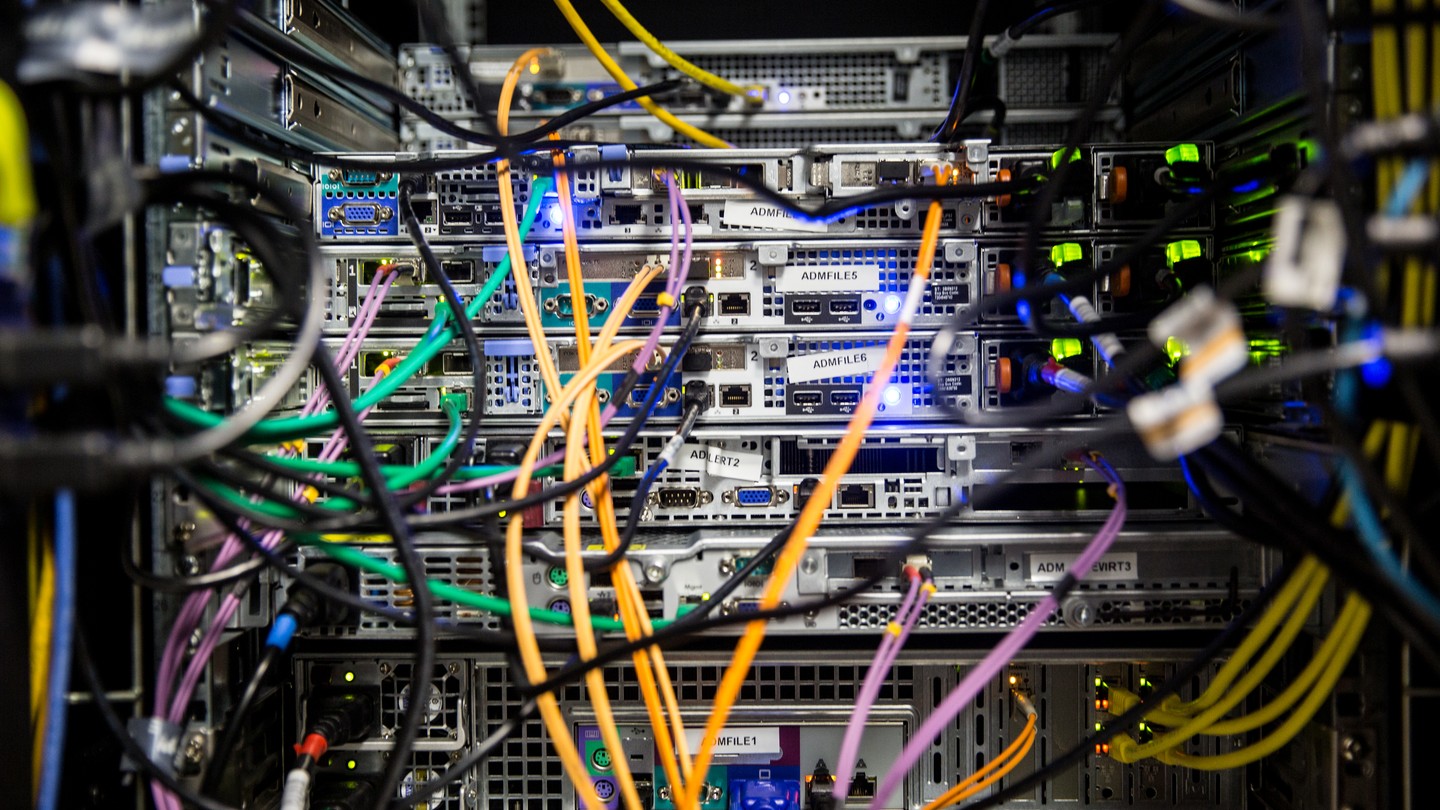
Hero: archival March 2017 server equipment and colored cables, not a CoreWeave facility. Photo: © École polytechnique — J.Barande (Jérémy Barande), “Datacenter informatique de l'Ecole Polytechnique”; cropped/resized. Source and adapted photograph: CC BY-SA 2.0. 12
Sources
- [1]CRWV daily prices and volume through October 30, 2026 — Yahoo Finance · Accessed 2026-11-01T11:09:25.047750-05:00 · Tier 3
- [2]Second-quarter 2026 results and financial statements, August 11 — CoreWeave Investor Relations · Accessed 2026-11-01T11:09:25.045531-05:00 · Tier 1
- [3]Third-quarter 2026 results call announcement, October 27 — CoreWeave Investor Relations · Accessed 2026-11-01T11:09:25.046242-05:00 · Tier 1
- [4]Denmark capacity and global network expansion, October 27 — CoreWeave Investor Relations · Accessed 2026-11-01T11:09:25.046711-05:00 · Tier 1
- [5]FOMC statement, October 28, 2026 — Federal Reserve · Accessed 2026-11-01T11:09:25.583259-05:00 · Tier 1
- [6]NBIS October 30 closing snapshot — Yahoo Finance · Accessed 2026-11-01T11:09:25.827485-05:00 · Tier 3
- [7]IREN October 30 closing snapshot — Yahoo Finance · Accessed 2026-11-01T11:09:26.180400-05:00 · Tier 3
- [8]CRWV delayed option snapshot, retrieved November 1 — Cboe · Accessed 2026-11-01T11:09:25.579769-05:00 · Tier 1
- [9]November 2026 economic-release schedule — U.S. Bureau of Labor Statistics · Accessed 2026-11-01T11:09:25.622305-05:00 · Tier 1
- [10]Cash-secured put: mechanics and risks — OCC Options Industry Council · Accessed 2026-11-01T11:14:56.662899-05:00 · Tier 1
- [11]Covered call: mechanics and risks — OCC Options Industry Council · Accessed 2026-11-01T11:14:56.933371-05:00 · Tier 1
- [12]Datacenter informatique de l'Ecole Polytechnique — archival photograph and CC BY-SA 2.0 license — Wikimedia Commons / École polytechnique · Accessed 2026-11-01T11:09:25.709622-05:00 · Tier 1
This content is for informational and educational purposes only and is not financial advice. Options involve risk and are not suitable for every investor. Do your own research before trading.
Keep YieldCove close
Choose YieldCove as a preferred source for Top Stories in Google Search.
Run the numbers before you trade: the free wheel strategy calculator sizes the whole cycle, and the cash-secured put calculator shows the cash, return and breakeven of one put.