
Rising protection costs challenge retail conviction
Stocks and bonds fell on September 10 as volatility rose. Reddit discussions paired a search for protection with lasting technology conviction, complicating the case for richer option premiums.
YieldCove Desk
4 min read

Protection became more expensive just as the usual places to hide were losing ground. At the September 10, 2026 close, US equity and corporate-bond proxies were lower, Treasury yields were higher and the $VIX had climbed. Ahead of the September 11 session, the sentiment tension is not simply institutions against individuals: market prices show a tougher risk environment, while Reddit discussions combine concern about hedging with continued faith in technology. For premium sellers, that distinction separates a larger option credit from a genuinely better risk bargain.
$VIX · September 10 close
17.84
+8.38% vs September 9
10-year Treasury par yield
4.95%
+12 basis points
$RSP · price change
-0.68%
$SPY: -0.60%
Scoreboard: losses across different kinds of risk
| Proxy | Exposure | Close (USD) | Change |
|---|---|---|---|
| $SPY | Large US stocks | 757.83 | -0.60% |
| $QQQ | Nasdaq-100 exposure | 708.69 | -1.06% |
| $IWM | Small US stocks | 287.70 | -1.01% |
| $DIA | Dow blue chips | 520.75 | -0.63% |
| $RSP | Equal-weight US stocks | 213.17 | -0.68% |
| $HYG | High-yield corporate bonds | 78.62 | -0.46% |
| $LQD | Investment-grade corporate bonds | 104.36 | -0.90% |
The equity pattern was broad enough to resist a comforting explanation based only on a few technology names. Small-cap $IWM and technology-heavy $QQQ both fell about 1%, while equal-weight $RSP also finished below the cap-weighted $SPY. The equal-weight shortfall was modest, however, so this was not an extreme concentration signal. These are completed-session price changes, not live offers or total returns including distributions. They describe which exposures were under pressure; they do not reveal who initiated the trades or why.
| Market proxy | Price change (%) |
|---|---|
| $SPY | -0.60% |
| $QQQ | -1.06% |
| $IWM | -1.01% |
| $DIA | -0.63% |
| $RSP | -0.68% |
| $HYG | -0.46% |
| $LQD | -0.90% |
Institutional risk signals: uncertainty becomes more expensive
The Cboe $VIX rose from 16.46 on September 9 to 17.84 on September 10, an 8.38% increase. The index reflects near-term volatility expectations embedded in S&P 500 options. Its rise therefore speaks to the price of uncertainty, rather than establishing that professional investors have abandoned equities. A portfolio can remain invested while adding protection; another can reduce cash equities without leaving an obvious signature in an index-volatility measure. A directional story about all institutions would erase those differences.
Options activity reinforces the need for precision. Cboe reported a total put/call volume ratio of 0.83 for September 10, an equity-option ratio of 0.60 and an index-option ratio of 0.85. The narrower $SPX plus $SPXW category stood at 1.14. Those categories are not interchangeable, and a ratio below parity is not a clean bullish vote: volume includes buyers and sellers, hedges and multi-leg strategies. The split is evidence of different contract activity, not proof that retail is buying calls while institutions buy puts.
Rates explain why a defensive label is not enough
The Treasury curve adds a less comfortable detail. The 2-year par yield rose to 4.56%, up 13 basis points, while the 10-year reached 4.95%, up 12 basis points. The 30-year yield was 5.37%, up 9 basis points. The 10-year minus 2-year spread remained positive at 39 basis points. This was an upward shift across maturities, not merely a distant-end move. Higher discount rates can challenge the price investors are willing to pay for future cash flows, including businesses whose operating earnings remain resilient.
The bond comparison is the counterweight to a simple credit-panic narrative. Investment-grade $LQD fell more than high-yield $HYG. That is consistent with interest-rate sensitivity being part of the pressure, but these funds have different maturity and credit exposures. Their price returns cannot isolate a change in corporate credit spreads. Nor does the smaller high-yield decline prove the absence of funding stress. The defensible conclusion is narrower: the session offered little shelter in these bond-price proxies, even as their income yields remained a separate consideration.
Retail pulse: a search for shelter without abandoning conviction
Reddit discussion on September 10–11 shows that tension in plain language. In r/stocks, a discussion of bonds and preferred shares asked when income becomes more compelling than another equity purchase. A separate technology-risk discussion questioned whether familiar defensive businesses are genuinely cheap places to diversify. In r/ETFs, a search for a hedge focused on investments that could behave differently when broad markets weaken. These conversations put portfolio resilience at the centre, rather than treating every decline as an automatic buying opportunity.
Conviction has not disappeared from the conversation. A r/stocks discussion of Nvidia ($NVDA) considered the durability of AI demand alongside competition and export uncertainty. A r/ETFs momentum discussion emphasised patience through stretches of underperformance. Those are beliefs and questions, not evidence of company results or a forecast for fund returns. They also show why the retail side should not be reduced to one mood: concern about protection can coexist with a long-term technology or factor thesis. The useful contrast is between immediate risk pricing and the investment horizon people are defending.
Where the signals agree—and where they do not
| Theme | Market signal | Retail discussion | Interpretation |
|---|---|---|---|
| Protection | Higher $VIX; equities and bonds lower | Search for genuine hedges | Agreement on the importance of resilience |
| Technology and breadth | Both $QQQ and $IWM weakened | AI conviction alongside diversification questions | Long-term belief faces a near-term price test |
| Defensive income | Higher Treasury yields; $LQD lower | Interest in bonds and preferred shares | More income does not remove price risk |
| Crowding | Put/call ratios vary by category | Momentum patience remains part of the debate | Neither signal measures everyone’s positioning |
What would change the picture
For the September 11 session, a more constructive combination would be stabilising Treasury yields, a lower $VIX and participation extending beyond the largest stocks. A rebound concentrated in a narrow group while equal-weight and small-cap exposures struggle would be less persuasive. Further weakness in bond proxies alongside rising volatility would challenge the idea that an equity bounce alone resolves the risk problem. These are observable conditions, not price targets or predictions about the next policy decision.
The counterargument matters
A single weak session does not establish capitulation. The equal-weight shortfall was small, and differing bond duration can explain part of the cross-asset pattern. Online conviction and worry are not representative measures of ownership or future order flow.
The premium-selling implication is restraint in interpretation, not a trade instruction. Higher index volatility can accompany larger option prices while the underlying risk becomes less forgiving. A cash-secured put still concentrates downside in the assigned stock; a covered call still retains most equity downside. Richer-looking income is therefore not the same as stronger protection. The central sentiment question is whether improving market participation can catch up with the conviction that remains in retail discussion, rather than whether either group has already won the argument.
Sources
- [1]September 10 closing prices / Cours de clôture du 10 septembre — CNBC · Accessed 2026-09-11T09:06:19.669462+00:00 · Tier 2
- [2]US ETF closing-price comparison / Comparaison des cours des FNB américains — TradingView · Accessed 2026-09-11T09:06:19.669795+00:00 · Tier 2
- [3]$VIX daily history / Historique quotidien du $VIX — Cboe Global Markets · Accessed 2026-09-11T09:06:19.670102+00:00 · Tier 1
- [4]$VIX definition / Définition du $VIX — Cboe Global Markets · Accessed 2026-09-11T09:06:19.670638+00:00 · Tier 1
- [5]Daily options statistics / Statistiques quotidiennes des options — Cboe Global Markets · Accessed 2026-09-11T09:06:19.670794+00:00 · Tier 1
- [6]Daily Treasury par yields / Rendements quotidiens au pair du Trésor — US Treasury · Accessed 2026-09-11T09:06:19.671122+00:00 · Tier 1
- [7]Bonds and preferred shares / Obligations et actions privilégiées — Reddit · r/stocks · Accessed 2026-09-11T09:08:41.678036+00:00 · Tier 4
- [8]Technology diversification / Diversification technologique — Reddit · r/stocks · Accessed 2026-09-11T09:08:41.678036+00:00 · Tier 4
- [9]$NVDA demand discussion / Discussion sur la demande de $NVDA — Reddit · r/stocks · Accessed 2026-09-11T09:08:41.678036+00:00 · Tier 4
- [10]Momentum and patience / Momentum et patience — Reddit · r/ETFs · Accessed 2026-09-11T09:08:41.678036+00:00 · Tier 4
- [11]Hedging discussion / Discussion sur la couverture — Reddit · r/ETFs · Accessed 2026-09-11T09:08:41.678036+00:00 · Tier 4
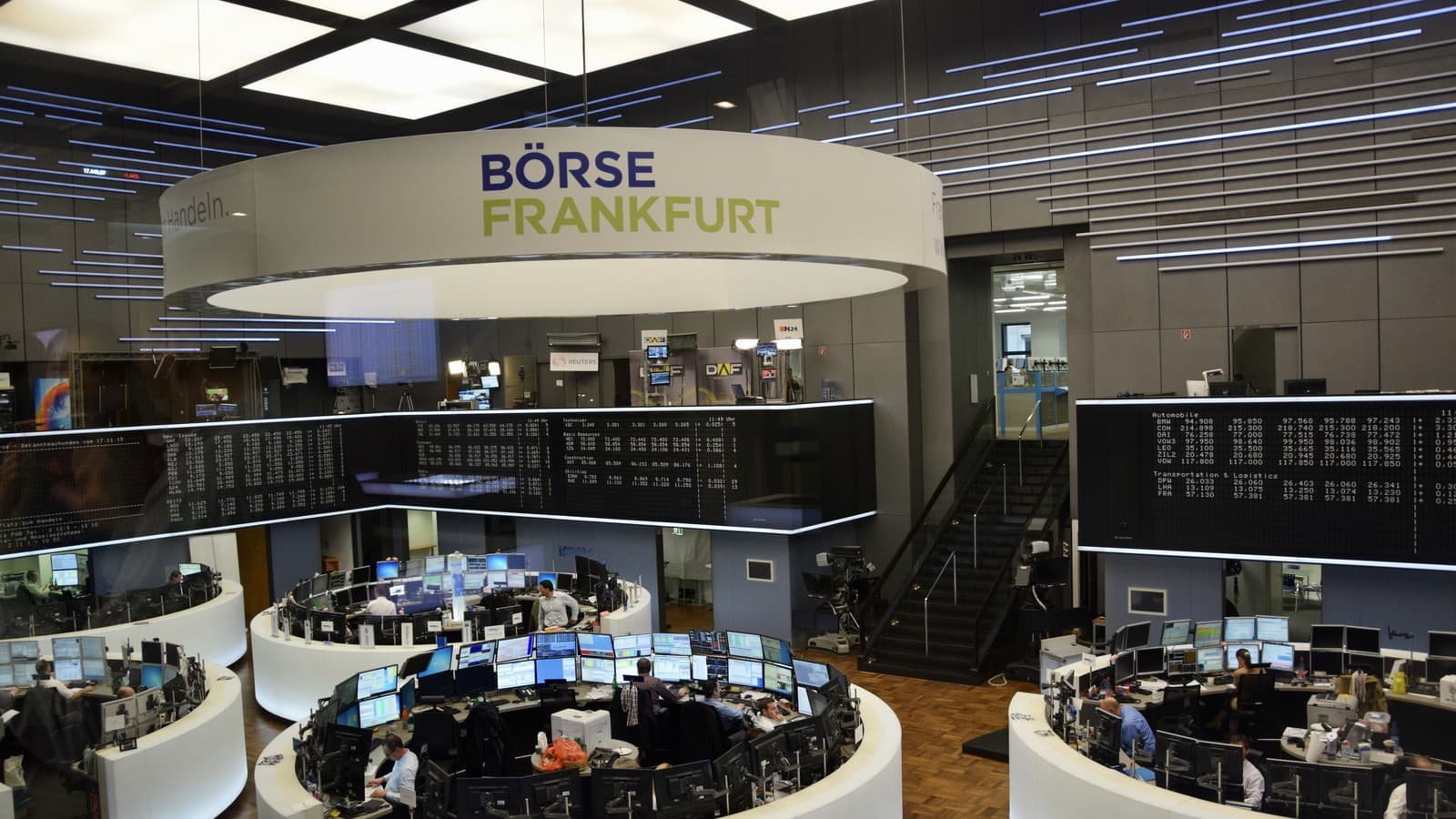
- [12]Archival quotation-screen photograph / Photo d’archives d’un écran de cotations — Ank Kumar · Wikimedia Commons · Accessed 2026-09-11T09:08:41.683897+00:00 · Tier 1
- [13]Photo and cropped adaptation: CC BY-SA 4.0 / Photo et adaptation recadrée : CC BY-SA 4.0 — Creative Commons · Accessed 2026-09-11T09:15:43.711487+00:00 · Tier 1
This content is for informational and educational purposes only and is not financial advice. Options involve risk and are not suitable for every investor. Do your own research before trading.
Read next

Relief spreads, but index options resist the all-clear
The rebound widened as volatility fell, yet index options remained more put-heavy than stock options. For premium sellers, calmer prices do not establish a one-way market.

Cheaper oil lifts futures, but Japan adds another rate hurdle
Falling oil and stronger equity futures extend the relief rally even as Japan tightens monetary policy. For premium sellers, calmer broad-market volatility must still be weighed against elevated bond yields and company-specific risks.
Tech holds its ground, but market confidence stays narrow
Technology-heavy shares held steady while broader equity measures fell. For option sellers, that split makes participation and downside exposure more useful than a single bullish or bearish sentiment label.