
Stocks rebound, but bonds withhold the all-clear
Stocks rebounded on September 11 as volatility fell, but short-term Treasury yields rose. Retail discussions paired diversification with momentum conviction, leaving option sellers a mixed risk backdrop.
YieldCove Desk
4 min read
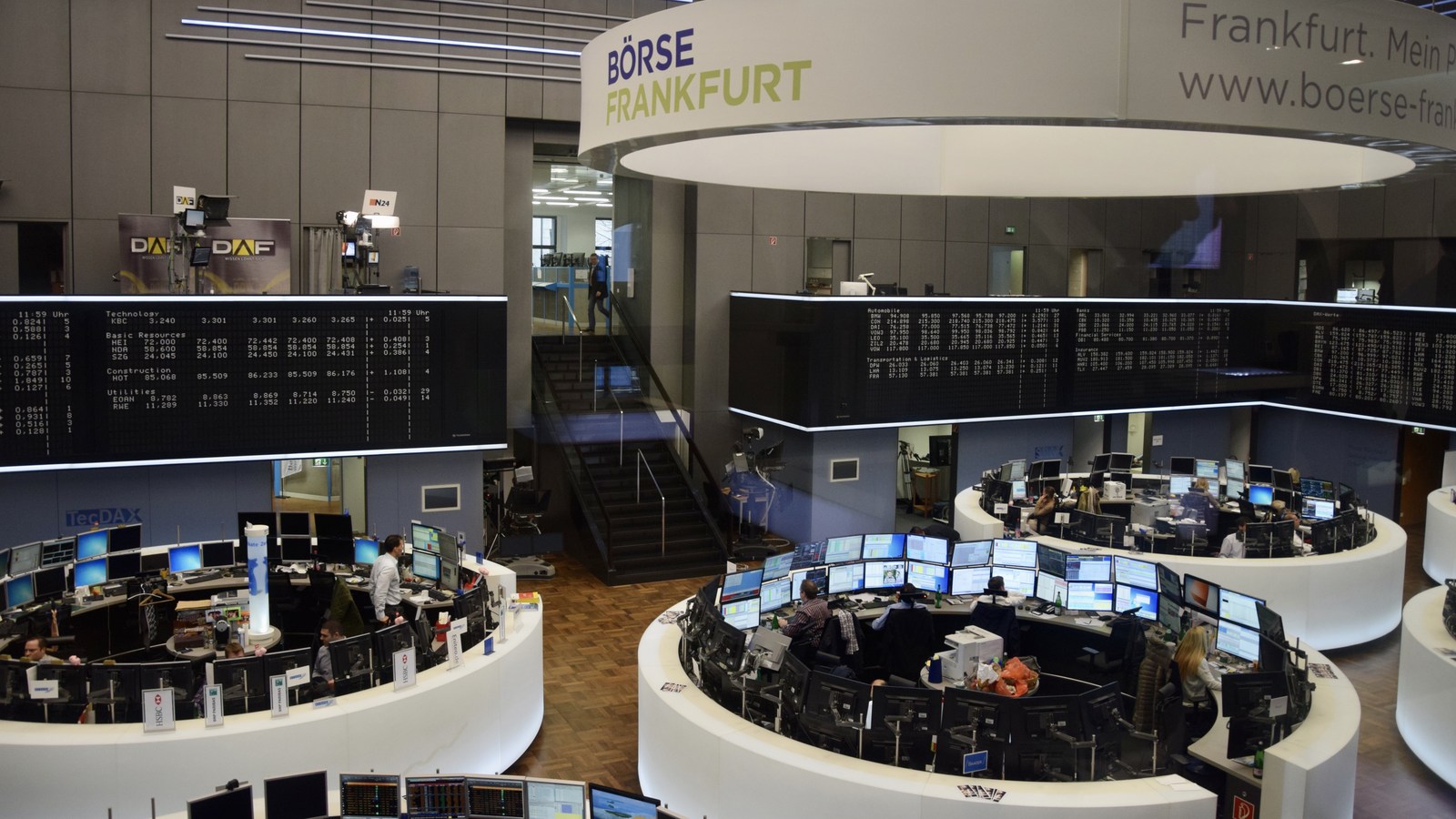
Friday’s equity rebound brought relief, but the bond market did not deliver a matching all-clear. The useful sentiment divide is between improving appetite for shares and a still-demanding interest-rate backdrop, while retail conversations pair diversification with continued enthusiasm for growth. U.S. cash equity markets are closed on Saturday, September 12, 2026; the market figures below describe the completed September 11 session, not executable weekend prices.
The sentiment scoreboard
$VIX close
15.84
−11.21% on September 11
10-year Treasury yield
4.96%
+1 basis point
Equal-weight equities: $RSP
+0.80%
September 11 close-to-close
| Proxy | Exposure | Close, USD | Change |
|---|---|---|---|
| $SPY | Large U.S. companies | 764.29 | +0.85% |
| $QQQ | Nasdaq-100 | 714.88 | +0.87% |
| $IWM | Small U.S. companies | 288.89 | +0.41% |
| $DIA | Dow industrials | 525.79 | +0.97% |
| $RSP | Equal-weight S&P 500 | 214.87 | +0.80% |
| $HYG | High-yield corporate bonds | 78.60 | -0.03% |
| $LQD | Investment-grade corporate bonds | 104.32 | -0.04% |
The rebound was not confined to the largest technology-heavy names. Equal-weight $RSP gained almost as much as $SPY, while $DIA outperformed both. That is a healthier participation pattern than a rally carried by a narrow group of heavyweight stocks. Yet small-cap $IWM lagged $QQQ, and the bond funds barely moved lower rather than joining the advance. This is evidence of a broader equity bounce, not proof of a durable rotation or coordinated institutional buying.
Institutional signals: relief without a rates reset
The official Treasury curve makes the restraint clear. The 2-year yield rose 7 basis points to 4.63%, while the 10-year edged up 1 basis point to 4.96%. The 30-year eased 2 basis points to 5.35%. The 10-year minus 2-year spread therefore stood at 33 basis points. Higher short-dated yields alongside a stock rebound do not describe an across-the-board easing in financial conditions. Prices reflect many participants; this curve cannot identify which institutions changed their portfolios or why.
Options activity adds a second distinction. Cboe’s September 11 put/call volume ratios were 0.86 overall, 1.06 for index options and 0.58 for equity options. Index puts thus outnumbered index calls, while equity calls outnumbered equity puts. The contrast is consistent with different uses of index and single-stock options, but it is not a clean institutional-versus-retail split. Volume does not reveal whether a contract was bought or sold, opened or closed, or combined with another position. Calling these ratios a vote for a market direction would overstate what they establish.
| Session | $VIX close |
|---|---|
| 2026-09-08 | 15.72 |
| 2026-09-09 | 16.46 |
| 2026-09-10 | 17.84 |
| 2026-09-11 | 15.84 |
The $VIX fell from 17.84 to 15.84, a decline of 2.00 index points. That is a marked retreat in broad-market implied volatility, not a guarantee of calm. For premium sellers, lower implied volatility generally reduces the volatility component of option prices, all else equal. It does not determine the price, liquidity or assignment risk of a particular contract. The modest declines in $HYG and $LQD also cannot be translated directly into widening credit spreads: interest-rate exposure and distributions affect bond-fund prices.
Retail pulse: diversification and momentum coexist
Friday’s Reddit discussions show a tension between staying invested and reducing concentration. In r/investing, a discussion about moving from stock picks into $VOO and $QQQM described a desire for a more stable long-term approach. Another discussion about total-market funds and rebalancing weighed the trade-offs of holding separate size-based funds. These are expressions of portfolio-design concerns, not confirmed transactions or evidence that households as a group are abandoning individual stocks.
That defensive-sounding language sits beside continued appetite for growth-oriented exposure. In r/ETFs, a momentum-allocation discussion expressed conviction in momentum investing while inviting counterarguments. A separate discussion of fund overlap sought more diversification. The juxtaposition matters: wanting fewer stock-specific risks is not the same as wanting less equity risk. A portfolio can gain more holdings while retaining a strong growth or momentum bias, so the language of diversification should not automatically be read as bearishness.
These discussions are individual opinions, not a representative measure of retail positioning. Their useful contribution is the contrast in objectives: conviction in long-term equity ownership can coexist with discomfort about concentration. They do not establish the scale of money committed to either approach, and the market rebound cannot be attributed to those conversations. The same caution applies in the other direction: a bond-price decline does not establish what any particular institutional manager believes.
Where the signals agree—and where they diverge
| Theme | Market signal | Retail narrative / implication |
|---|---|---|
| Equity participation | $RSP rose alongside $SPY. | Diversification remains compatible with staying invested. |
| Growth conviction | $QQQ outpaced small-cap $IWM. | Momentum enthusiasm coexists with concentration concerns. |
| Financial conditions | Short-dated Treasury yields rose. | A simpler portfolio does not remove valuation sensitivity. |
| Protection | The $VIX retreated; index put volume exceeded calls. | Less immediate anxiety is not proof of less underlying risk. |
YieldCove’s reading is relief without full confirmation across asset classes. The equity advance deserves more weight than a story of universal pessimism, because participation extended beyond a single headline fund. The lack of a corresponding bond rally deserves more weight than a story of uniformly easier conditions. Neither observation supplies a reliable head count of bulls or bears. Sentiment is better understood here as several overlapping risk decisions rather than two camps marching in opposite directions.
What could change the picture
- On Monday, September 14, broader participation would be more persuasive if small caps joined equal-weight equities rather than relying mainly on large-company strength.
- A retreat in short-dated Treasury yields alongside firmer bond prices would offer a more coherent easing signal; renewed yield pressure would challenge the equity relief.
- Sustained calmer implied volatility with wider equity participation would strengthen the constructive interpretation. A quick reversal in both would weaken it, even if online enthusiasm remained intact.
The strongest counterargument
The cautious reading can itself go too far. Small bond-fund price changes are weak evidence of a major change in credit appetite, and different maturities moved in different directions. Equal-weight stocks participated, not merely the largest names. The next session could therefore confirm that the equity rebound was more informative than the bond hesitation. Conversely, a single rebound does not settle durability. Weekend developments can also change the opening balance before cash equities trade again; completed-session prices cannot resolve that uncertainty.
The premium-seller’s distinction
A calmer volatility index is a pricing change, not permission to ignore concentration, valuation or gap risk. Index put/call activity cannot identify a suitable contract, and portfolio discussions cannot establish a trade’s probability of success. The central question is whether broader equity participation and rates begin to tell the same story—not whether a bullish narrative sounds more confident.
Sources
- [1]Completed-session ETF prices / Cours des FNB à la clôture — CNBC · Accessed 2026-09-12T09:05:57.466709+00:00 · Tier 2
- [2]Completed-session ETF prices / Cours des FNB à la clôture — TradingView · Accessed 2026-09-12T09:05:57.467010+00:00 · Tier 2
- [3]Daily $VIX closing history / Historique des clôtures du $VIX — Cboe Global Markets · Accessed 2026-09-12T09:05:57.468392+00:00 · Tier 1
- [4]$VIX overview / Présentation du $VIX — Cboe Global Markets · Accessed 2026-09-12T09:05:57.470108+00:00 · Tier 1
- [5]Daily Treasury par yield curve / Courbe quotidienne des taux du Trésor — U.S. Treasury · Accessed 2026-09-12T09:05:57.471764+00:00 · Tier 1
- [6]September 11 options statistics / Statistiques des options du 11 septembre — Cboe Global Markets · Accessed 2026-09-12T09:05:57.471026+00:00 · Tier 1
- [7]Total-market funds and rebalancing / Fonds de marché total et rééquilibrage — Reddit · r/investing · Accessed 2026-09-12T09:05:57.600352+00:00 · Tier 4
- [8]From stock picks to $VOO and $QQQM / Des titres individuels à $VOO et $QQQM — Reddit · r/investing · Accessed 2026-09-12T09:05:57.600352+00:00 · Tier 4
- [9]Momentum allocation discussion / Discussion sur une allocation momentum — Reddit · r/ETFs · Accessed 2026-09-12T09:08:46.736550+00:00 · Tier 4
- [10]Fund overlap and diversification / Chevauchement des fonds et diversification — Reddit · r/ETFs · Accessed 2026-09-12T09:08:46.736550+00:00 · Tier 4
- [11]Trading calendar / Calendrier boursier — NYSE · Accessed 2026-09-12T09:08:46.736994+00:00 · Tier 1
- [12]Frankfurt trading floor, 2015 / Salle de marché de Francfort, 2015 — Ank Kumar · Wikimedia Commons · Accessed 2026-09-12T09:15:33.432446+00:00 · Tier 1
- [13]Photograph: CC BY-SA 4.0 / Photographie : CC BY-SA 4.0 — Creative Commons · Accessed 2026-09-12T09:15:33.432446+00:00 · Tier 1
This content is for informational and educational purposes only and is not financial advice. Options involve risk and are not suitable for every investor. Do your own research before trading.
Read next

Relief spreads, but index options resist the all-clear
The rebound widened as volatility fell, yet index options remained more put-heavy than stock options. For premium sellers, calmer prices do not establish a one-way market.

Cheaper oil lifts futures, but Japan adds another rate hurdle
Falling oil and stronger equity futures extend the relief rally even as Japan tightens monetary policy. For premium sellers, calmer broad-market volatility must still be weighed against elevated bond yields and company-specific risks.
Stock losses expose a split in Fed-day risk appetite
Equity losses coexist with call-heavy stock options and put-heavy index activity. For option sellers, the split shows why trading volume is not a reliable shortcut to investor conviction.